Ultra DM: A Graffiti Sketch Typeface Inspired by Depeche Mode's Ultra Album
Typeface selection often defines the visual tone of a project before a single word is read. Among the many display fonts available today, Ultra DM occupies a distinct space. It is not a neutral workhorse typeface, nor is it a generic grunge font. Instead, Ultra DM draws direct inspiration from the cover art of Depeche Mode's 1997 album Ultra—a record whose visual identity combined raw texture, hand-drawn lettering, and an unmistakable late-90s mood. The result is a graffiti sketch typeface that channels that same spirit into a usable digital format. For designers, marketers, and content creators seeking an authentic vintage edge, Ultra DM offers something worth examining beyond surface-level aesthetics.
What Ultra DM Is and Why It Deserves Attention
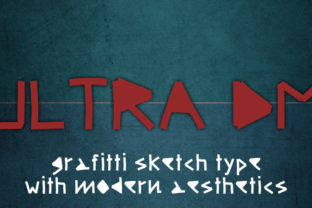
At its core, Ultra DM is a display typeface built around the visual language of graffiti sketching, but it is not a literal replication of spray-painted tags. The letterforms carry the irregular strokes, varied thickness, and slight imperfections that come from hand-drawn lettering. The connection to Depeche Mode's Ultra album cover is not incidental—the original cover design featured deliberately rough, sketch-like typography that stood in contrast to the polished electronic production of the music itself. Ultra DM translates that contradiction into a font: rough on the surface but intentional in structure.
What makes Ultra DM worth discussing is how it bridges two creative worlds. It appeals to fans of Depeche Mode and 90s alternative culture, but it also serves a practical function for modern design work. The typeface does not pretend to be pristine. It embraces scuffs, uneven edges, and a hand-drawn quality that is difficult to achieve through standard digital manipulation. For anyone working on projects that require an immediate sense of authenticity—album art, merchandise, posters, social media graphics, or branding for music-adjacent businesses—Ultra DM provides a tool that already contains that rawness baked into its design DNA.
Key Characteristics of the Ultra DM Typeface
Understanding the specific traits of Ultra DM helps clarify where it fits in a designer's toolkit. The typeface operates primarily as a display font, meaning it is optimized for larger sizes such as headlines, titles, logos, and short-form text. Its graffiti sketch origins are immediately visible in the irregular baseline and the slight variation in stroke width across characters. The letters do not sit on a rigid geometric grid. Instead, they appear drawn quickly and deliberately, with a natural rhythm that suggests motion.
The character set includes both uppercase and lowercase forms, though the uppercase letters carry the most visual weight. Numerals and basic punctuation are present, making Ultra DM usable for dates, prices, or short informational elements in a design. The typeface also includes several alternate glyphs, which allow for variation when repeating letters—a useful feature for avoiding visual monotony in headlines.
One of the more subtle strengths of Ultra DM is its ink trap–like details. The intersections of strokes are slightly opened, a technique borrowed from metal type and adapted here to reinforce the hand-drawn illusion. This prevents small counters from filling in when the font is used at smaller sizes, though Ultra DM remains best suited for display purposes where those details remain visible.
Practical Value and Real-World Applications
In professional use, Ultra DM performs well in contexts where a vintage, gritty, or underground aesthetic is the goal. It works naturally on album covers, concert posters, flyers for electronic or alternative music events, and merchandise design. The typeface also finds a home in editorial design for features on 90s culture, music history, or urban art scenes. For small business owners—particularly those running record stores, vintage clothing shops, or creative studios—Ultra DM can serve as a consistent brand element that signals a specific cultural sensibility.
Marketers and content creators working in the music, fashion, or nightlife industries will find Ultra DM useful for social media graphics that need to stand out in a crowded feed. The font's irregularities catch the eye more effectively than a standard sans-serif or script typeface. When paired with muted color palettes, distressed textures, or photographic backgrounds with grain, Ultra DM reinforces a cohesive vintage atmosphere without requiring additional post-processing.
Educators and publishers covering topics in graphic design, typography, or music history may also find Ultra DM useful as a case study in how visual culture draws from music packaging. The typeface can be used to demonstrate how a single album cover can influence design language for years afterward. For students learning about display typography, analyzing Ultra DM provides a concrete example of how hand-drawn qualities translate into digital fonts.
Usability, Flexibility, and Consistency
From a usability standpoint, Ultra DM is straightforward to implement. It comes in standard font formats compatible with major design software, including Adobe Creative Suite, Affinity, and web-based tools like Canva or Figma. Installation is simple, and the typeface functions without unexpected spacing issues or missing characters. The kerning is well-calibrated for a display font, meaning letters sit comfortably together without requiring extensive manual adjustment. That said, for critical logo work or large headlines, some designers may still want to fine-tune spacing on a case-by-case basis, as the irregular stroke paths can create optical gaps in certain letter pairings.
Flexibility is one area where Ultra DM shows both strength and limitation. The typeface is available in a single weight, which is by design—the hand-drawn sketch aesthetic does not lend itself to a full family of weights and widths. This is not a shortcoming but a constraint that buyers should understand before purchase. Ultra DM is not intended for body text, extended paragraphs, or multi-weight hierarchy systems. It is a focused tool for specific tasks. Within that scope, it performs with high consistency. The letterforms remain true to the original inspiration across the entire character set, and there are no weak glyphs that break the visual illusion.
For web use, Ultra DM can be embedded via standard @font-face rules, though its display nature means it should be used sparingly in responsive layouts. On larger screens, the details hold well. On smaller mobile screens, the thinner strokes may become less distinct, so testing at various breakpoints is recommended before committing to heavy use in digital interfaces.
Quality and Presentation: What to Expect
The quality of Ultra DM is evident in the attention paid to the irregular details that define its character. Each letter appears individually drawn, yet the set as a whole maintains visual coherence. The stroke textures are not uniformly rough—some characters carry more distress than others, which mimics the natural inconsistency of hand-drawn lettering. This is a mark of good design in the graffiti sketch genre, where oversanitization would destroy the authenticity the font aims to capture.
Presentation-wise, Ultra DM pairs well with clean, minimalist layouts where the font can act as the primary visual anchor. It also works effectively when layered over textured backgrounds, such as paper grain, concrete surfaces, or scanned fabric. In those settings, the font's rough edges blend naturally with the background texture, creating a unified tactile impression. Conversely, using Ultra DM on sterile white backgrounds can highlight its imperfections in a way that may feel forced rather than intentional. Designers should consider the surrounding environment when deploying this typeface.
Who Benefits Most from Ultra DM
The primary audience for Ultra DM includes graphic designers, illustrators, and art directors working in music, fashion, nightlife, and street culture. Freelancers and small studio owners who take on projects for independent musicians, event promoters, or boutique brands will find the typeface a reliable shortcut to establishing a specific mood. Bloggers and content creators covering alternative music, 90s nostalgia, or underground art scenes can use Ultra DM for headers and featured images to reinforce their editorial voice.
Entrepreneurs launching products or services with a vintage or countercultural angle—such as vinyl subscription boxes, retro apparel lines, or analog photography workshops—will benefit from the typeface's ability to communicate authenticity without requiring elaborate graphic treatment. For these users, Ultra DM reduces the gap between concept and visual execution.
On the other hand, corporate branding, institutional communications, or projects requiring broad accessibility and legibility at small sizes are not appropriate contexts for Ultra DM. The typeface is deliberately niche, and its value lies in its specificity rather than its universality.
Practical Recommendations and Limitations
When integrating Ultra DM into a workflow, consider using it as a headline or accent typeface paired with a clean, neutral sans-serif for body text. This contrast allows the rough qualities of Ultra DM to stand out without overwhelming the overall design. For print projects, test the typeface at the intended output size before final production, as very small sizes may cause the finer strokes to become indistinct. For digital projects, enable anti-aliasing settings that preserve the hand-drawn edges without blurring them into indistinction.
A limitation worth noting is the lack of extended language support. Ultra DM covers standard Latin characters but may not include accented letters or special punctuation required for projects in languages beyond English. Designers working with multilingual content should verify character coverage before purchasing. Additionally, the single-weight offering means that creating visual hierarchy within a single headline is not possible without combining Ultra DM with another typeface.
Another practical consideration is licensing. Like most quality display fonts, Ultra DM is a commercial product, and buyers should review the license terms for desktop, web, and app use separately. For freelance designers who bill per project, a standard desktop license is usually sufficient. Studios or agencies producing large volumes of content may benefit from extended licensing to cover multiple clients or campaigns.
Long-Term Value and Final Thoughts
Ultra DM is not a font that will become dated quickly because it is already rooted in a specific historical moment. The late-90s aesthetic it references has seen renewed interest, and the typeface stands to remain relevant as long as that visual language continues to resonate. For designers who regularly work with vintage, alternative, or music-related projects, Ultra DM offers a tool that delivers consistent results without requiring extensive custom lettering work. Its value lies not in versatility but in character. If a project calls for authenticity, texture, and a direct line to the raw energy of Depeche Mode's Ultra album cover, Ultra DM is a typeface that earns its place in the toolkit.