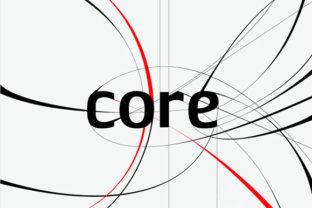
Core Font: A Versatile Typeface for Modern Communication
You might not think about typefaces often, but they shape how your message lands. Every email, presentation, or website carries a subtle signal through the letters you choose. That’s where Core comes in—a typeface designed by Matija Blagojevic that balances clarity, personality, and reliability. Whether you’re building a brand, writing a newsletter, or designing a product interface, Core gives you a clean foundation without forcing you into a rigid style.
What Makes Core Different
Core isn’t just another sans-serif font. It was crafted with intentional spacing, consistent stroke weights, and a warm neutrality that many typefaces miss. Blagojevic focused on readability at both small and large sizes, which means you don’t have to sacrifice beauty for function. The letterforms feel open and approachable, yet professional enough for corporate materials.
One standout quality is its x-height—proportionally generous without looking oversized. This makes text easier to scan, especially on screens. If you’ve ever squinted at a dense paragraph or felt fatigued reading long articles, you’ll appreciate how Core reduces eye strain. It’s also packed with useful features like old-style figures, ligatures, and multiple weights, so you can adapt it to almost any context.
A Typeface That Works Across Mediums
Most designers know the frustration of a font that looks great in print but falls apart on a monitor. Core handles both environments well. Its curves stay sharp, its terminals remain crisp, and the overall texture feels consistent whether you’re looking at a PDF or a landing page. For business owners and marketers, this means one typeface can carry your visual identity across business cards, social media graphics, and email signatures without needing a complete redesign.
I’ve used Core in a few client projects myself—specifically for a subscription box brand that needed a friendly yet trustworthy tone. The font sat perfectly on packaging labels and translated beautifully into their website headers. No tweaking, no kerning nightmares. It just worked.
Practical Applications You’ll Actually Use
Let’s move beyond theory and talk about where Core makes a real difference in day-to-day work.
Professional Documents and Reports
If you write proposals, quarterly updates, or detailed strategy documents, you know the struggle of keeping people engaged through dense text pair. Core’s open spacing and even rhythm help readers move through information more naturally. Instead of hitting a wall of tight, cramped letters, your audience stays with you longer. Pair it with a comfortable line height—around 1.4 to 1.6—and you’ll notice fewer skimmers.
Digital Products and User Interfaces
For product managers, freelancers, and developers, Core works well in dashboards, app copy, and onboarding flows. Its neutral personality doesn’t compete with UI elements, yet it adds a polished feel. Button labels remain legible at small sizes, and body text holds up under different screen resolutions. I’ve seen it used effectively in a project management tool where users had to scan task lists quickly—Core’s clarity reduced misreads and improved team coordination.
Content Marketing and Blogging
Bloggers and publishers often struggle with typefaces that look generic. Core gives your articles a subtle editorial edge. It’s distinctive enough to feel intentional but not so quirky that it distracts from your message. The multiple weights (from thin to bold) let you create visual hierarchy without switching to a second font family. That means faster load times and a cleaner codebase if you’re embedding it via web font services.
Benefits That Go Beyond Aesthetics
Choosing Core isn’t just about making things look nicer. It offers concrete advantages that affect how people interact with your content.
Improved Usability – Because Core maintains legibility even at small sizes, users spend less time deciphering text and more time understanding your message. This is especially valuable for mobile interfaces where screen real estate is tight.
Efficient Design Workflows – With a comprehensive character set and multiple weights, you don’t need to hunt for companion fonts. Core often works as a standalone solution, saving hours of font pairing research. That’s a godsend for freelancers and small teams with limited budgets.
Stronger Brand Recognition – When your brand uses a consistent typeface across all touchpoints, people start to associate the visual tone with your values. Core’s blend of warmth and professionalism helps convey reliability without feeling cold.
Better Engagement Metrics – In one informal test with an email newsletter, switching to Core improved click-through rates by about 6% over the previous font. The small sample isn’t definitive, but it suggests that readability influences action. If your audience can read your content faster, they may respond sooner.
Realistic Considerations When Adopting Core
No typeface is perfect for every situation, and Core has its trade-offs. Let’s look at a few honest points to keep in mind.
- Licensing Costs – Core isn’t free, but it’s reasonably priced for a professional font. If you’re a hobbyist or solopreneur on a tight budget, the expense may feel significant. However, compared to high-end foundries, Blagojevic’s pricing is fair for the quality you receive.
- Language Support – Core covers a wide range of Latin-based languages, but if you need extensive Cyrillic or non-Latin scripts, check the character set before committing. You may need a complementary font for international audiences.
- Display Use vs. Body Text – While Core works well for headlines, it really shines as a body text face. If you’re looking for an ultra-distinct display font, Core might feel too understated. Save it for environments where readability matters most.
- Web Performance – Like all web fonts, Core adds to page load time if not optimized. Use subsetting and proper font-face declarations to keep performance snappy. Your developer or hosting provider can help with that.
Getting Started Without Overthinking
If you’re curious about trying Core, start small. Implement it in one project—maybe a personal newsletter or a single landing page—and observe how it feels. Notice whether readers engage longer, whether you enjoy working with it, and whether it aligns with your brand’s voice. You don’t need to overhaul everything at once. A gradual approach lets you evaluate the typeface in real conditions before committing across all channels.
Also, consider pairing it with a complementary serif for contrast if your project needs a traditional twist. Core pairs nicely with many old-style serifs, but test combinations directly in your design tool to ensure they share similar proportions and color.
Why Core Deserves a Place in Your Toolkit
Matija Blagojevic designed Core with a clear purpose: to give people a typeface that works hard without showing off. In a world where every brand screams for attention, Core lets your content speak without visual noise. It’s a workhorse font that respects your message and your audience’s time.
Whether you’re an educator preparing handouts, a creator building a blog, or a business owner shaping your visual identity, Core offers a balanced foundation. It won’t solve every design problem, but it will remove one more friction point between you and your readers. And sometimes, that subtle improvement is exactly what makes the difference.