Martha: A Playful Typeface That Balances Personality with Practical Design
When evaluating a typeface for professional or creative work, the first question is rarely about aesthetics alone. It is about fit. Does the font serve the message? Does it hold up across formats? Does it bring something useful without demanding attention for its own sake? Martha, a playful font designed by Pere Esquerrà, enters that conversation with a clear sense of purpose. It is not trying to be everything to everyone. Instead, it carves out a specific niche and fills it with intention, charm, and real utility.
What makes Martha worth discussing is not just its visual character, but the way it negotiates the gap between informal and functional. It is a font that can smile without becoming frivolous, and that is a harder balance to strike than many designers realize.
What Martha Is and Why It Stands Apart
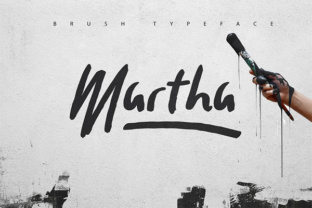
Martha is a display typeface built around playful proportions and a hand-drawn sensibility. Pere Esquerrà, known for typefaces that carry warmth and human touches, designed Martha to feel approachable rather than mechanical. The letterforms have a slightly irregular rhythm, with rounded terminals, generous curves, and an overall softness that avoids stiffness. It does not look like it was generated by a machine following strict geometric rules. It looks like someone drew it with care.
That does not mean Martha lacks discipline. The spacing is consistent. The weights are balanced. The x-height is generous enough to keep lowercase text readable even at moderate sizes. The playfulness lives in the details, not in chaos. Ascenders and descenders are drawn with personality, but they stay within predictable bounds. The result is a typeface that reads as lively without becoming distracting.
Martha is not a text font for long paragraphs. It is a display font meant for headlines, branding elements, packaging, signage, and digital interfaces where a human touch adds value. Its purpose is to stand out gently, not to shout.
Key Characteristics and Design Strengths
Understanding Martha requires looking at the specific choices that define its personality. Several characteristics stand out as particularly valuable for real-world projects.
- Playful but legible: The rounded forms and slightly uneven stroke widths give Martha a friendly character, but the letterforms remain clearly distinguishable. There is no ambiguity between lowercase a and o, or between n and h. This is important when the font is used at headline sizes where quirks can easily become readability issues.
- Warm without being childish: Many playful fonts tip too far into whimsy, making them unsuitable for anything beyond children's content. Martha avoids that trap. It has enough polish to work for boutique brands, creative agencies, lifestyle publications, and even certain corporate contexts where a less formal tone is appropriate.
- Generous x-height: The taller lowercase letters improve readability at smaller display sizes. This is a practical advantage when Martha appears on screens, social media graphics, or secondary headlines.
- Consistent spacing: Esquerrà has paid attention to letterfit. Martha does not require excessive manual kerning in most standard use cases. That saves time during layout and reduces the risk of awkward gaps in headlines.
These characteristics make Martha a typeface that works well in isolation and in combination. It pairs naturally with simpler sans-serif or neutral serif fonts for body text, creating a clear hierarchy without clashing.
Real-World Performance and Usability
A typeface can look good in a specimen sheet and fall apart in actual use. Martha holds up well under practical conditions, but like any font, it has contexts where it shines and others where it struggles.
Strengths in Practice
In branding projects, Martha performs particularly well when the goal is to communicate authenticity and approachability. A small business selling handmade goods, a café with a local focus, or a creative consultancy that wants to feel less corporate can all benefit from Martha's tone. It adds a layer of personality that feels earned rather than forced.
For digital use, Martha works effectively in hero headlines, navigation titles, and call-to-action text. The rounded forms render smoothly on screens, and the font's warmth translates well even at moderate resolutions. Social media graphics, email headers, and landing page titles are natural applications.
Print applications also suit Martha, especially in packaging, flyers, posters, and small-scale signage. The ink traps and open counters help maintain clarity in physical reproduction, and the font's character stands out on printed materials without requiring additional embellishment.
Limitations to Consider
Martha is not designed for extended body text. At small sizes and in long passages, the playful details can fatigue the eye. For paragraphs, pairing Martha with a clean, neutral body font is the better approach. Something like a simple geometric sans or a legible serif will provide contrast and readability while letting Martha do its work in display roles.
Additionally, Martha may feel out of place in highly formal or conservative industries. Legal firms, financial institutions, and traditional corporate settings would likely find the tone mismatched. That is not a flaw in the font, but a limitation of context. Understanding where Martha belongs is essential to using it well.
The character set is adequate for most Western European languages, but users working with extended Latin or non-Latin scripts should verify coverage before committing to a project. Esquerrà's focus on quality over quantity means Martha is not a sprawling superfamily, and that is fine for its intended use cases.
Quality, Reliability, and Long-Term Value
From a technical standpoint, Martha is well-constructed. The font files include proper hinting for screen rendering, which matters for digital projects where clarity at various sizes is critical. OpenType features, where present, are implemented cleanly, and the font behaves predictably across major design applications.
For professionals who invest in typefaces, long-term value depends on how often a font can be used across different projects. Martha offers good return on investment for designers, marketers, and small business owners who regularly work with brands that benefit from a friendly, distinctive voice. It is not a daily workhorse for every project, but when the brief calls for warmth, it is often the right choice.
The font's durability also comes from its restraint. Because Martha does not rely on extreme trends or gimmicks, it is likely to age well. Tasteful playfulness tends to outlast novelty-driven design, and Martha sits firmly in the former category.
Who Benefits Most from Martha
Different audiences will find different kinds of value in Martha, but some groups are especially well-suited to what this typeface offers.
- Freelance designers and creative entrepreneurs: Martha adds a distinctive voice to portfolios, personal branding, and client work. It helps projects feel more human, which is often a differentiator in competitive markets.
- Small business owners and local brands: For businesses that rely on community connection and approachability, Martha communicates the right tone without needing elaborate illustration or photography.
- Bloggers, publishers, and content creators: Headlines, featured images, and social media assets benefit from Martha's character. It helps content stand out in crowded feeds while remaining professional.
- Marketers working with lifestyle or creative audiences: Campaigns targeting younger or design-conscious demographics can use Martha to signal authenticity and care in visual communication.
- Educators and workshop leaders: Materials that need to feel welcoming and accessible without being childish can use Martha effectively.
For each of these groups, Martha serves as a tool for differentiation. It helps projects feel considered rather than generic, and that is a meaningful advantage in almost any field.
Practical Recommendations for Using Martha
To get the most out of Martha, consider a few practical approaches based on real project experience.
- Use it at display sizes. Martha performs best at 24 points and above. At larger sizes, the detail in the letterforms becomes visible and adds to the overall impact.
- Pair it with a neutral counterpart. A clean sans-serif like Open Sans, Lato, or Work Sans provides contrast. Let Martha carry the personality while the body text stays out of the way.
- Avoid overusing it. Because Martha has strong character, using it too broadly within a single project can feel overwhelming. Reserve it for primary headlines, key branding elements, and moments where emphasis matters.
- Test it in your actual medium. Always preview Martha on the device or material where it will be used. Screen rendering, print resolution, and size all affect how the details read.
- Consider color and spacing. Martha works well with generous letter-spacing in all-caps settings, and it pairs nicely with muted or warm color palettes that match its friendly tone.
Final Thoughts on Martha's Place in a Type Library
Martha is not a typeface that tries to solve every problem. It is a tool with a specific voice, and that voice is useful precisely because it is focused. For professionals who curate their type libraries with intention, Martha belongs in the category of fonts that earn their place through consistency, personality, and reliable performance in the right contexts.
Pere Esquerrà has designed a font that understands its audience without pandering to them. It is playful but not silly, warm but not sentimental, distinctive but not difficult. For anyone building a brand, a campaign, or a creative project that needs to feel human, Martha is worth considering as a central part of the visual vocabulary.
The best typefaces do not just look good. They help the message land. Martha helps that landing feel a little gentler, and that is exactly what playful design should do.