Samitha: A Practical Evaluation of a Modern Script Typeface
Choosing a typeface can significantly influence how a message is perceived. Among the many options available, script fonts occupy a distinctive space, offering personality and movement that serif or sans-serif designs often lack. Samitha has emerged as a modern script font that warrants a closer look, particularly for those evaluating its fit for branding, invitations, or digital content. This article provides a balanced assessment of Samitha, exploring its characteristics, strengths, limitations, and the contexts where it may—or may not—serve your project well.
What Samitha Is and How It Functions
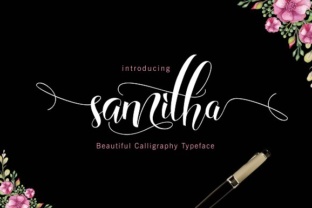
Samitha is a contemporary script typeface designed to evoke elegance and fluidity while maintaining readability. Unlike traditional cursive fonts that may lean heavily on ornate flourishes, Samitha strikes a balance between decorative appeal and functional legibility. Its letterforms are typically connected, with moderate stroke contrast and a natural, hand-lettered rhythm. The font often includes contextual alternates and ligatures, allowing the text to flow smoothly without awkward breaks.
From a technical standpoint, Samitha supports OpenType features, which means designers can access swashes, stylistic sets, or alternate characters to customize the look. It is available in at least one weight—usually Regular—though some versions may offer additional styles. The font is suitable for both print and screen use, though its performance on digital platforms depends on rendering settings and size.
Reasons Someone Might Evaluate Samitha
Interest in Samitha typically arises from a need for a typeface that conveys warmth, sophistication, or a personal touch without sacrificing clarity. Here are common motivations for considering it:
- Brand identity – Businesses aiming for a friendly yet refined image may find Samitha aligns with their visual tone.
- Event materials – Wedding invitations, save-the-dates, or formal announcements often benefit from a script that feels both modern and timeless.
- Digital content – Social media graphics, quotes, or headers can use Samitha to add visual interest without overwhelming the message.
- Packaging and labels – Product packaging for boutique items, cosmetics, or artisanal goods may use Samitha to suggest craftsmanship.
Understanding these motivations helps frame the evaluation: the font’s suitability varies depending on the medium, audience, and design goals.
Aesthetic versatility
Samitha manages to feel both contemporary and approachable. Its strokes are not excessively thin or thick, which reduces the risk of illegibility at smaller sizes. The font retains a humanist quality, making it suitable for projects that require a personal touch without appearing overly casual.
OpenType capabilities
For designers who value customization, Samitha’s alternates and ligatures allow for variation within a single word or phrase. This is particularly useful for logos or headlines where repeated letters could otherwise look monotonous.
Moderate legibility
Compared to highly decorative scripts, Samitha offers relatively good legibility in body text sizes (around 14–18 points). The letterforms are distinct enough to avoid confusion between characters like n and u or a and o. This makes it a practical choice for short to medium-length passages.
Print and digital compatibility
Samitha renders reasonably well on screens when used at appropriate sizes and with proper anti-aliasing. It also works in print across various paper types, though test prints are recommended to verify ink spread and stroke clarity.
Tradeoffs and Considerations
No typeface is without limitations, and Samitha is no exception. Being aware of these tradeoffs helps avoid mismatched expectations.
Limited weight and style range
Many script fonts offer multiple weights—light, regular, bold—as well as italic or condensed versions. Samitha typically comes in a single weight, which restricts flexibility in complex layouts. If your project requires hierarchy through weight variation, you may need to combine it with another typeface.
Performance at very small sizes
While Samitha is legible at moderate sizes, its connected letters and moderate stroke contrast can become muddy below 12 points on screen. In print, fine details may be lost on uncoated paper. For applications like captions or footnotes, a simpler sans-serif might be more reliable.
Potential for overlap with other scripts
Samitha occupies a middle ground among modern scripts. It is not as flamboyant as calligraphic styles, nor as minimal as geometric scripts. If your brand or project requires a very distinct or highly ornamental look, alternatives may better serve that need.
Licensing and cost
Depending on the foundry, Samitha may be available under a desktop license, web license, or both. Costs vary, and some uses (such as embedding in mobile apps) may require extended licensing. Always verify the license terms before committing to a project, especially for commercial use.
Situations Where Samitha Is a Strong Fit
Samitha works best in contexts where the typeface can be given enough space and size to express its character. The following scenarios are particularly well-suited:
- Headlines and titles – For blog headers, magazine titles, or poster headlines, Samitha adds a refined, inviting feel. Pair it with a clean sans-serif for body text.
- Short-form branding – Logos, wordmarks, and taglines benefit from Samitha’s balanced script. Its moderate legibility ensures the brand name remains recognizable at various scales.
- Invitations and stationery – Wedding invitations, greeting cards, and personal notes often rely on script to convey emotion. Samitha’s modern touch keeps the design from feeling dated.
- Social media graphics – Quotation cards, motivational posts, or promotional images can use Samitha for a polished yet approachable look. Pair it with ample whitespace to avoid clutter.
- Product packaging – For boutique items, cosmetics, or specialty foods, Samitha can communicate quality and care without appearing overly formal.
Situations Where Alternatives May Be Worth Considering
No single typeface fits every need. Here are cases where you might look beyond Samitha:
High-volume body text
Script typefaces, including Samitha, are generally not designed for long passages. If your project includes multiple paragraphs of continuous text, a serif or sans-serif will offer better reading comfort and eye stamina.
Extreme versatility requirements
If your design system requires multiple weights, italics, or condensed versions for hierarchy, Samitha’s limited family may fall short. Consider a more extensive script family like Brusher or Playlist if you need variation.
Very small or low-resolution displays
For mobile interfaces or small captions, Samitha’s details may not render clearly. A simpler script or a sans-serif alternative will maintain readability.
Highly formal or traditional contexts
Samitha’s modern character may not suit ultra-formal invitations (e.g., black-tie events) or heritage brands that require a more classic calligraphic style. In those cases, fonts like Bickham Script or Snell Roundhand might be more appropriate.
Budget constraints
While Samitha is reasonably priced, free alternatives like Alex Brush or Pacifico can offer similar aesthetics for projects with limited budgets. However, these alternatives may lack the same OpenType features or polish.
Practical Decision-Making Insights
When evaluating Samitha for your project, consider the following framework:
- Define the primary use case – Is the font for headlines, short text, or branding? Where will it appear (print, web, mobile)? This determines whether Samitha’s strengths align with your needs.
- Test at actual sizes – Never rely solely on previews at large sizes. Print a sample at the intended size and on the intended paper or view it on the target screen. Check legibility, stroke clarity, and overall impression.
- Consider pairing options – Samitha pairs well with neutral sans-serifs (e.g., Open Sans, Lato) or subtle serifs (e.g., Crimson Text). Test combinations to ensure visual harmony.
- Assess licensing requirements – Determine whether you need web embedding, app embedding, or unlimited print rights. Compare the cost against your budget and the font’s expected lifespan in your project.
- Evaluate alternative scripts – Compare Samitha with at least two other modern scripts. Look for differences in stroke contrast, x-height, and overall tone. This helps confirm whether Samitha is the best match or merely a convenient choice.
- Gather feedback – Share sample designs with colleagues or stakeholders. Script fonts often evoke subjective reactions, so early input can save rework later.
Does Samitha Align with Your Goals?
Samitha is a capable modern script font that brings a balanced blend of elegance and readability. For projects that call for a personal, refined touch—such as branding, invitations, or short-form digital content—it can be a strong choice. Its OpenType features and moderate legibility give it an edge over more decorative scripts, while its single weight and limited style range may require you to supplement it with another typeface for complex layouts.
The decision ultimately hinges on the specific demands of your project. If you need a script that is neither too ornate nor too plain, and if you can provide it with adequate size and space, Samitha is worth serious consideration. However, if your work involves lengthy texts, extreme size variation, or very formal contexts, exploring other options will likely serve you better.
By approaching the selection process with clear criteria and realistic expectations, you can determine whether Samitha is the right tool for your message—or whether another typeface might carry it more effectively.