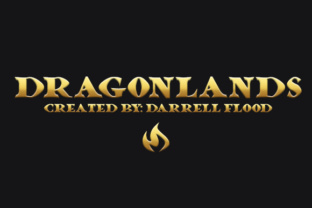
Dragonlands: A Fantasy Font for Archaic Adventures
When Darrell Flood released Dragonlands, it brought something rare to the typography world: a fantasy font that feels genuinely ancient without falling apart under practical use. Many display fonts lean so heavily into ornamentation that they become unreadable beyond a single title. Dragonlands avoids that trap. Its weighty strokes and archaic stylization evoke weathered stone tablets, old parchment maps, and dungeon doors that have not been opened in centuries. But it also works. You can set a block of text with it, and readers will actually stay with you.
This makes Dragonlands more than a novelty. For creators building worlds, whether for tabletop campaigns, indie games, or fantasy publications, this font offers a foundation that carries mood without sacrificing clarity. Let us explore what makes it distinctive, where it shines, and how different users can adapt it for real projects.
What Dragonlands Brings to the Page
Dragonlands is not a subtle font. Its letterforms carry deliberate heft, with thick serifs and compressed proportions that echo medieval manuscript hands and early carved inscriptions. The weighty archaic stylization Darrell Flood built into the design gives every character a sense of physical presence. You can almost imagine chisels and ink pots behind each letter.
What sets it apart from other fantasy fonts is its consistency. Many display typefaces in this genre look dramatic in isolation but break down in longer settings. Dragonlands maintains its personality across sentences, paragraphs, and even short blocks of body copy. This is rare. It means you can use it for chapter headings, campaign lore pages, item descriptions, and map labels without switching to a secondary font that breaks the atmosphere.
The font also handles punctuation and numerals with the same care as its alphabet. For anyone building game materials or publishing fantasy content, that attention to detail matters. A font that stumbles on a simple dash or a numeral can pull a reader straight out of the immersion. Dragonlands does not do that.
Creative Applications Across Media
Because Dragonlands balances presence with practicality, it opens up a wide range of uses. Here are several directions worth considering, each suited to different audiences and platforms.
Tabletop Roleplaying Materials
If you run or publish content for games like Dungeons & Dragons, Pathfinder, or other fantasy systems, Dragonlands fits naturally into your workflow. Use it for:
- Quest handouts that players receive from in-world sources such as a guild notice board or a crumbling scroll
- Dungeon key maps where room names and legend entries need to feel part of the setting
- Monster lore entries in a bestiary, giving ancient creatures the typographic weight they deserve
- In-game letters and journals that players discover during a session, adding a tactile layer to the narrative
The key is restraint. Use Dragonlands for headings, titles, and short passages, then pair it with a clean, neutral sans-serif for statistical blocks and mechanical text. This keeps the game readable while preserving atmosphere.
Fantasy Publishing and Blogging
Authors, bloggers, and publishers covering fantasy topics can use Dragonlands to establish consistent visual branding. A blog about worldbuilding, for example, can set post titles in Dragonlands and use a lighter font for body content. This signals to readers that they are entering a space designed for imagination and depth.
For self-published fantasy novels or zines, Dragonlands works well for chapter headers, part titles, and cover typography. Because the font reads clearly at larger sizes, it holds up in both print and digital formats. Just be cautious with very small sizes. Below 14 points, the weight can crowd the letterforms, especially in dense paragraphs.
Game Development and Digital Design
Indie game developers building pixel-art or hand-drawn fantasy worlds can integrate Dragonlands into UI elements, title screens, and in-world signage. The font does not require heavy rendering to look authentic. It works on low-resolution displays, which makes it practical for retro-style games or titles targeting mobile platforms.
Consider using Dragonlands for:
- Title screens and menu headers that establish tone immediately
- In-game books and notes that players can open and read
- Map labels and location markers on overworld or dungeon screens
- Quest log headers that separate active quests from completed ones
The weighty archaic stylization holds up well against dark backgrounds, which is common in fantasy game UIs. Light text on a dark surface brings out the font's carved quality.
Adapting Dragonlands for Different Audiences
One font does not fit every reader. How you use Dragonlands should shift depending on who you are speaking to and what platform you are on.
For hobbyists and gamers aged 20 to 35, Dragonlands can be used generously because this audience associates archaic typography with the fantasy genre. They expect it. For a homebrew campaign handout, setting entire paragraphs in Dragonlands can work, as long as line spacing is generous and the text is printed at a readable size.
For bloggers and content creators targeting a broader audience that includes casual readers, use Dragonlands sparingly. Reserve it for titles, pull quotes, and short decorative elements. The average visitor arriving from social media or search will lose patience with a wall of ornate text. Meet them halfway by giving them the atmosphere they want in the headers and the clarity they need in the body.
For educators and workshop facilitators teaching creative writing or game design, Dragonlands can serve as a visual anchor. Show it alongside a modern sans-serif to demonstrate how typography shapes tone. This is a concrete way to discuss mood, audience, and readability without relying on abstract language.
Practical Project Ideas Using Dragonlands
To move from theory to execution, here are several specific projects where Dragonlands can carry the creative load.
One-page dungeon zine. Create a printable zine containing a single dungeon layout, three monster descriptions, and one magic item. Set the zine title and dungeon name in Dragonlands. Use a simple serif for body text. Print on off-white paper for an aged look. This is a fast project that yields a tangible result.
Fantasy newsletter header. If you run a newsletter about worldbuilding or TTRPG design, design a header graphic using Dragonlands. Keep the background dark with subtle texture. Add the font at 48 to 72 points. This creates immediate brand recognition and sets subscriber expectations for content depth.
Custom campaign lore book. Compile your campaign setting notes into a formatted PDF. Use Dragonlands for chapter titles, region names, and deity listings. Include a short sample of the font in your promotional materials to attract players who value immersive presentation.
Merchandise mockups. For small business owners selling fantasy-themed products, Dragonlands works on mugs, t-shirts, and stickers as long as the text is short. A single word like 'Quest' or 'Dragon' in Dragonlands carries more weight than a full sentence.
Keeping Results Clear and Consistent
Using a weighty font like Dragonlands requires deliberate choices to maintain legibility and professional polish. Here are guidelines that apply across projects.
Pair it with a neutral companion font. Dragonlands is not a typeface that does everything. Pair it with a clean sans-serif like Lato, Montserrat, or Open Sans for body content. This contrast lets each font do what it does best. The archaic font sets the scene, and the modern font delivers information without friction.
Control line spacing. Because Dragonlands has thick strokes and compact proportions, its default line spacing can feel tight. Increase leading by 20 to 30 percent over your standard setting. This prevents letters from stacking into an unreadable mass.
Limit character count per line. Keep lines short. In printed materials, aim for 8 to 12 words per line when using Dragonlands for body text. On screens, use columns or narrow containers. Long lines in a heavy font tire the eye quickly.
Test at different sizes before finalizing. A font that looks dramatic at 48 points can become muddy at 12 points. Print or render test samples at the exact sizes you plan to use. Adjust tracking and leading accordingly. Small adjustments make a significant difference.
Respect the tone. Dragonlands carries a specific mood. Do not force it into contexts where that mood clashes. A whimsical children's story or a corporate productivity guide would fight against the font's character. Save it for projects where ancient, adventurous, and grounded are the right notes to hit.
Why Dragonlands Belongs in Your Creative Toolkit
Darrell Flood designed Dragonlands for dungeon adventures, but its utility reaches further than any single genre. Its weighty archaic stylization gives it an authentic voice that a wide range of creators can use effectively. Whether you are publishing fantasy content, designing a game interface, or building a campaign from scratch, this font offers a reliable way to signal depth, history, and adventure without relying on visual clutter.
The best creative tools do not demand attention. They get out of the way and let the content do the work. Dragonlands does that. It establishes mood quickly and then fades into the background, supporting your ideas rather than competing with them. For anyone serious about fantasy and speculative creativity, that is exactly the kind of tool worth keeping close.