Retrograph: A Hand-Drawn Decorative Font with Timeless Character
Typography is often the quiet backbone of design. It can whisper elegance, shout urgency, or gently guide a reader through a story. But every so often, a typeface comes along that does more than just carry words—it becomes part of the message itself. Retrograph, a hand-drawn decorative font created by Eva Barabasne Olasz, is exactly that kind of typeface. It doesn't just sit on the page; it adds texture, emotion, and a distinctly human touch to any project.
In an era where sleek, minimalist sans-serifs dominate screens and brand guidelines, fonts like Retrograph feel like a breath of fresh air. They remind us that imperfection can be beautiful and that the quirks of a human hand can bring warmth and authenticity to design. But what exactly makes this font special, and how can it fit into modern creative workflows? Let's explore its qualities, practical uses, and the considerations you should keep in mind before adding it to your toolkit.
The Hand-Drawn Quality That Sets Retrograph Apart
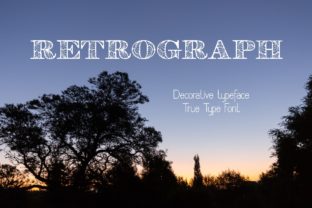
Retrograph is not a font born from mathematical curves or rigid bezier handles. It is, at its core, a collection of hand-drawn letters carefully digitized into a functional typeface. Every character carries subtle irregularities—slight variations in stroke thickness, gentle wavering in line direction, and organic endings that no vector tool could perfectly replicate. These aren't flaws; they're the font's greatest strengths.
When you use Retrograph, you're essentially using the authentic handwriting of Eva Barabasne Olasz, refined just enough to work as a complete alphabet. This gives the font an immediate personality. It feels personal, like a note written by hand rather than typed by machine. In a world flooded with polished, predictable typography, that human quality stands out immediately.
The decorative nature of the font also means it carries a certain nostalgic weight. The name "Retrograph" hints at a vintage sensibility, and indeed the letterforms evoke mid-century signage, retro packaging, and old-fashioned chalkboard menus. But it's not a strict historical reproduction—it's a modern interpretation of that aesthetic, filtered through a contemporary designer's eye.
Key Characteristics Every Designer Should Know
Before you drop Retrograph into a layout, there are a few important traits to understand. This isn't a workhorse text font. It won't serve you well for lengthy body copy or dense paragraphs. Instead, it thrives in specific roles where its decorative voice can shine.
- Spacing and kerning: Because the letters are hand-drawn, spacing can feel a bit uneven compared to a polished text face. Some letter combinations may need manual kerning adjustments, especially in display settings. This is a normal part of working with hand-drawn fonts, and a little tweaking goes a long way.
- Stroke variation: You'll notice that some strokes are heavier than others, mimicking the natural pressure changes of a pen or brush. This gives the font a lively, dynamic rhythm but also means it works best at medium to large sizes where those nuances are visible.
- Decorative details: Certain characters may include flourishes, swashes, or extended tails. These add charm but also require thoughtful placement. Overuse can clutter a design, but using them selectively can create beautiful focal points.
- Limited character set: Depending on the version you're using, Retrograph may not include extensive language support or special characters. Always check the glyph set against your project's needs before committing.
Understanding these traits helps you use the font with intention. You're not fighting its quirks—you're leveraging them.
Where Retrograph Fits into Modern Workflows
Despite its handmade origins, Retrograph is perfectly suited for contemporary digital and print projects. In fact, its organic nature fills a gap that many modern designs need: authenticity. Brands, small businesses, and creatives are increasingly moving away from sterile perfection and toward warmth, personality, and human connection. Retrograph delivers exactly that.
Here are some scenarios where this font truly excels:
Branding and logos. Small businesses, cafes, bakeries, vintage shops, and creative studios often need a logo that feels approachable and memorable. Retrograph's hand-drawn look can serve as a brand's visual voice—especially when paired with a clean, neutral secondary font. It says "we're human" without saying a word.
Packaging and product labels. Think of artisanal jam jars, handmade soap boxes, craft beer labels, or limited-edition product runs. The tactile, handcrafted vibe of Retrograph aligns beautifully with packaging that wants to convey quality and care. It suggests that what's inside was made by hand, with attention to detail.
Editorial headers and pull quotes. In magazines, blogs, or printed publications, using Retrograph for chapter titles, pull quotes, or section dividers adds visual contrast. When the body text is clean and readable, a decorative header in Retrograph becomes an anchor for the reader's eye.
Social media graphics. Instagram quotes, Pinterest pins, or Facebook event banners benefit from typography that stops the scroll. Retrograph's distinct look grabs attention quickly, especially when paired with simple backgrounds and thoughtful color palettes.
Wedding and event stationery. Invitations, place cards, menus, and thank-you notes for rustic or vintage-themed events are a natural fit. The font's hand-drawn quality echoes the personal touch of handwritten correspondence, which many couples and hosts value deeply.
Pairing Retrograph with Other Fonts
One of the most practical skills when working with any decorative font is knowing how to pair it well. Retrograph is strong, but it needs a supporting cast. You don't want two loud fonts competing for attention. Instead, let Retrograph take center stage while other typefaces provide readability and balance.
Consider pairing Retrograph with a clean sans-serif like Open Sans, Lato, or Montserrat. The contrast between the hand-drawn warmth of Retrograph and the crisp neutrality of a modern sans creates a pleasing tension. For a more classic feel, pair it with a simple serif like Crimson Text or Playfair Display. The key is to keep the secondary font understated so that Retrograph remains the visual hero.
You can also pair Retrograph with itself by using it at different sizes. A large, bold headline in Retrograph followed by a smaller subhead in the same font (but with careful spacing) can create a cohesive, artful look. Just be mindful that extended reading in Retrograph is tiring, so reserve it for short, impactful text.
Practical Benefits of Choosing a Hand-Drawn Font
Beyond aesthetics, there are genuine practical reasons to choose a font like Retrograph for your projects. One major benefit is differentiation. In a crowded marketplace, standing out visually matters. Using a less common, distinctive typeface signals that you've put thought into your design. It suggests confidence and individuality.
Another benefit is emotional resonance. Hand-drawn fonts trigger a psychological response that polished digital fonts often don't. They feel more sincere, more personal, and less corporate. This can be especially valuable for small brands, artists, or any project that relies on building trust and connection with an audience.
Additionally, hand-drawn fonts tend to age gracefully. Trends come and go, but authentic handmade quality rarely goes out of style. A design built around Retrograph today will likely still feel relevant and charming years from now—something that's harder to guarantee with hyper-trendy typefaces.
Considerations Before You Buy or Download
Retrograph is not appropriate for every project, and that's fine. Being selective with your typeface choices is part of good design. Before you commit, consider the following:
- Readability at small sizes: At 12pt or smaller, Retrograph may become difficult to read, especially on screens. If you need legible body text, this is not the font for that job. Reserve it for headings, logos, or display uses.
- Licensing: Always check the license agreement. Some hand-drawn fonts have restrictions on commercial use, embedding in apps, or usage in logo trademarks. Make sure the license covers your intended application.
- File format and compatibility: Ensure the font comes in formats that work with your workflow—usually OTF or TTF. If you're using web fonts, check for WOFF or WOFF2 availability.
- Weight and style options: Some hand-drawn fonts only come in a single weight. If your project needs variety (bold, italic, light), you may need to pair Retrograph with another font family for those variations.
Taking a few minutes to verify these details can save headaches later and ensure that your final design works exactly as you imagined.
Who Should Use Retrograph?
This font is ideal for graphic designers, brand identity specialists, packaging designers, wedding stationery creators, and anyone who values typography with personality. It's also a strong choice for non-designers who want to add a professional, handmade touch to a project—like a small business owner creating their own labels or a couple designing their wedding invitations. The font's charm is immediately accessible, even for those without formal design training.
At the same time, seasoned typographers will appreciate the craftsmanship behind Retrograph. Eva Barabasne Olasz has created a typeface that balances artistic expression with functional usability. It's not a novelty font that loses its appeal after one use—it has staying power because it's rooted in genuine skill and thoughtful design.
Final Observations on Using Retrograph
Typography is one of the most powerful tools in a designer's arsenal, and choosing the right font can elevate a project from ordinary to unforgettable. Retrograph earns its place in that conversation because it offers something that many digital fonts cannot: soul. Its hand-drawn origins give it a warmth and authenticity that resonates with audiences tired of sterile, corporate design.
When you use Retrograph, you're not just selecting a typeface—you're making a statement. You're saying that imperfection has value, that human touch matters, and that design can be both beautiful and personal. Whether you're building a brand identity, designing a product label, or crafting an invitation, Retrograph invites your audience to pause, look closer, and feel something genuine.
So experiment with it. Test it in different sizes and contexts. Pair it with clean fonts, adjust the kerning, and see how it performs in your specific workflow. The more you work with fonts like Retrograph, the more you develop an instinct for when and how to use them effectively. And that instinct is one of the most valuable skills any designer can cultivate.