Red Monday: A Clean Sans Serif Font Built for Clarity and Modern Design
Typography shapes how we read, feel, and trust what we see. In a world overflowing with visual noise, finding a typeface that balances personality with readability can feel like a rare discovery. That is where Red Monday enters the conversation. This clean and unique sans serif font has been quietly gaining attention among designers, business owners, and content creators who value clarity without sacrificing character. Whether you are building a brand, designing a website, or laying out printed materials, understanding what Red Monday offers can help you make a more informed choice. This article walks through its purpose, core features, real-world applications, and the practical considerations that matter when choosing a font for your next project.
What Is Red Monday? A Font with a Purpose
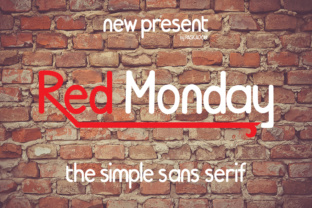
At its core, Red Monday is a sans serif typeface that emphasizes clean lines, consistent stroke widths, and a contemporary silhouette. Unlike decorative fonts that draw attention to themselves, Red Monday is designed to support content. It lets words speak without visual distraction. The name itself evokes a sense of freshness and new beginnings — a subtle nod to starting the week with clarity and intention.
What sets Red Monday apart is not just its aesthetic, but its philosophy. It belongs to a growing family of typefaces that prioritize utility and accessibility. The letterforms are carefully spaced to reduce eye strain, making it suitable for both headlines and body text. Whether you are drafting a long-form article or a short call-to-action button, the font maintains legibility across sizes and contexts.
For professionals who work with text daily, such as web developers, graphic designers, and content strategists, Red Monday offers a reliable tool. It does not try to reinvent typography. Instead, it refines the essentials: form, function, and flow.
Core Features and Characteristics of Red Monday
Understanding the technical and visual traits of Red Monday helps you decide where it fits best. Below are the key characteristics that define this typeface.
- Geometric yet approachable: The shapes are rooted in geometric principles, giving the font a structured appearance. However, subtle curves in characters like 'a' and 'g' soften the overall look, making it feel inviting rather than rigid.
- Consistent x-height: A taller x-height improves readability, especially on screens. Red Monday uses this design choice to ensure characters remain distinct even at smaller sizes.
- Open apertures: Letters such as 'e' and 'c' feature open counters and apertures. This reduces visual crowding and enhances recognition, particularly in digital environments where pixel density varies.
- Minimal contrast: The stroke thickness remains uniform across each character. This reduces visual noise and aligns with the clean, modern ethos of the font.
- Neutral personality: Red Monday does not lean heavily into any single style — it is neither overly formal nor excessively casual. This neutrality makes it adaptable for diverse use cases.
- Extended character set: Depending on the version, Red Monday often includes multiple weights, ligatures, and support for various Latin-based languages. This flexibility matters for international projects or multilingual content.
Each of these features contributes to an overall experience that is both polished and practical. For creators who value efficiency, Red Monday reduces the time spent adjusting spacing, kerning, or contrast. The font works out of the box with minimal tweaking.
Digital Interfaces and Web Design
In the world of user experience, readability is non-negotiable. Red Monday performs well on screens thanks to its clear letterforms and generous spacing. It can be used for navigation menus, body paragraphs, and form labels without breaking visual consistency. Many designers pair it with a complementary serif for headings to create a balanced typographic hierarchy. The font's neutral tone also makes it a solid choice for dashboards, data tables, and mobile app interfaces where clarity is critical.
Branding and Corporate Identity
Business owners looking for a font that communicates professionalism without coldness will find Red Monday appealing. It works across logos, business cards, letterheads, and presentation decks. Because it avoids trendy flourishes, the font ages gracefully. A brand identity built on Red Monday remains relevant even as design trends shift. Startups, consulting firms, and creative agencies have used it to establish a clean, trustworthy voice.
Editorial and Print Projects
Print designers often struggle to find sans serif fonts that hold up in long-form layouts. Red Monday's consistent stroke width and open apertures ensure that text remains comfortable to read in brochures, magazines, and reports. Its lighter weights work well for captions and sidebars, while bolder weights add emphasis without becoming overwhelming.
Marketing Collateral and Social Media
For social media managers and content creators, Red Monday provides a consistent visual identity across different platforms. It can be used in quote cards, infographics, and promotional banners. The font renders clearly on both desktop and mobile screens, which is essential for campaigns that rely on fast visual processing.
Product Packaging and Labels
Product packaging benefits from typography that communicates instantly. Red Monday's clean lines and balanced proportions make it suitable for labels, tags, and packaging inserts. Whether the product is organic skincare or artisanal coffee, the font adds a layer of sophistication without distracting from the product itself.
Who Benefits Most from Using Red Monday?
While Red Monday is versatile, certain groups will find it especially effective.
- UX and UI designers who need a reliable sans serif for interfaces, prototypes, and design systems.
- Freelance creatives who work across multiple projects and want a single typeface that adapts to different tones and formats.
- Small business owners who manage their own branding and need a professional font without a steep learning curve.
- Content writers and editors who spend long hours reading on screens and prefer a typeface that reduces eye fatigue.
- Students and educators preparing presentations, reports, or academic materials value clarity and structure.
Red Monday is not limited to these groups. Its accessibility and clean design make it a strong choice for anyone who prioritizes clear communication over decorative flair.
Strengths and Practical Considerations
Like any typeface, Red Monday comes with strengths and limitations. Knowing these helps you decide if it is the right fit for your specific use case.
Strengths
- High legibility across sizes: From 8px captions to 72px headlines, the font maintains clarity without distortion.
- Low visual fatigue: The consistent stroke weight and spacing reduce cognitive load during extended reading sessions.
- Versatile weight options: Having multiple weights allows for rich typographic hierarchy within a single family.
- Neutral enough for global audiences: The design does not carry strong cultural or stylistic associations, making it suitable for international projects.
Limitations
- Lacks distinct personality for some branding: If your brand relies on a highly distinctive or emotional visual identity, Red Monday may feel too understated.
- May not suit highly decorative or artistic projects: Projects that require ornamental flourishes, handmade aesthetics, or script-like warmth are better served by other typefaces.
- Limited availability in some ecosystems: Depending on the license, Red Monday may not be pre-installed on all operating systems. You may need to embed or host it separately for web use.
Understanding these trade-offs empowers you to use Red Monday where it adds the most value. It is a tool of precision, not a magic solution. When used intentionally, it elevates content without competing with it.
How to Evaluate If Red Monday Is Right for Your Project
Choosing a typeface is a decision that affects readability, brand perception, and user experience. Here is a practical framework to evaluate whether Red Monday aligns with your needs.
- Define the primary use case. Are you designing for screen, print, or both? Red Monday works well in both environments, but you may need to adjust weight and size based on medium.
- Consider your audience. Who will read the text? If your audience includes older readers or people with visual impairments, the font's high legibility is an advantage.
- Assess your brand's tone. Is your brand voice neutral, professional, and clear? Red Monday supports that tone well. If your brand is playful, loud, or emotionally expressive, you may want a more character-driven font.
- Test with real content. Download or preview the font with actual text from your project. Pay attention to how it looks in paragraphs, headlines, and small sizes. Readability on paper is different from readability on a backlit screen.
- Check technical requirements. Confirm the font's licensing, file formats (WOFF2, OTF, TTF), and language support. Ensure it integrates smoothly with your design tools and development workflow.
- Pair it thoughtfully. Red Monday pairs well with serif fonts like Merriweather or Georgia for editorial projects. For purely sans serif layouts, combine it with a more geometric or humanist font for contrast.
By following these steps, you avoid common pitfalls like choosing a font based on appearance alone. Typography is functional art, and Red Monday performs best when used with intention.
Practical Examples and Scenarios
To bring the discussion to life, here are a few specific scenarios where Red Monday fits naturally.
Scenario 1: A small business launches a new website. The owner wants a modern yet trustworthy look. They use Red Monday for all body text and button labels. The font's clean lines communicate reliability, while its approachable curves keep the site from feeling sterile. Visitors spend more time reading because the text is comfortable to scan.
Scenario 2: A freelance designer prepares a portfolio. The portfolio includes case studies with long descriptions. Red Monday is used for project titles and captions. The consistent spacing helps maintain a grid-like structure across the page. Potential clients perceive the work as organized and professional.
Scenario 3: An educator designs a course workbook. The workbook includes exercises, explanations, and call-out boxes. Red Monday's multiple weights allow the designer to distinguish between headings, instructions, and example text without using different fonts. The result is a clean, cohesive learning tool that minimizes distraction.
Scenario 4: A marketing team creates a social media campaign. They produce quote cards, product announcements, and infographics. Red Monday ensures that text remains legible even when images are viewed on small screens. The team saves time because they do not need to adjust spacing or kerning for each asset.
These examples highlight the font's adaptability across contexts. It is not a one-size-fits-all solution, but it covers a wide range of everyday needs.
Final Thoughts on Red Monday
Red Monday stands out precisely because it does not try to steal the spotlight. In a design landscape where novelty often overshadows utility, this clean and unique sans serif font makes a case for restraint. It offers clarity, consistency, and comfort — qualities that matter deeply in both digital and print environments.
For professionals who work with words daily, Red Monday is a dependable tool. It lowers the friction between content and reader, allowing ideas to flow without visual interruption. Whether you are building a brand, shaping an interface, or simply looking for a font that respects the reader's time, Red Monday deserves a place in your typography toolkit.
The best typefaces are the ones you barely notice — because they are doing exactly what they are supposed to do. Red Monday is one of them.