Half Moon Rising: A Thin Sans Serif Font for Modern Design
Typography shapes how we perceive information. Whether you are building a brand identity, designing a website, or laying out a publication, the right typeface can communicate tone, clarity, and sophistication without saying a word. Half Moon Rising, a thin sans serif font created by MBA Fonts, offers a distinctive combination of lightness and legibility that suits a wide range of applications. Available in two variations—Half Moon Rising Regular and Half Moon Rising Regular Italic—this font brings a refined, airy aesthetic to both digital and print projects.
In this article, we will explore what makes Half Moon Rising stand out, where it works best, and how you can use it effectively in your own work. Whether you are a designer, marketer, educator, or entrepreneur, understanding the strengths of this typeface can help you make better typographic choices.
What Makes Half Moon Rising Unique
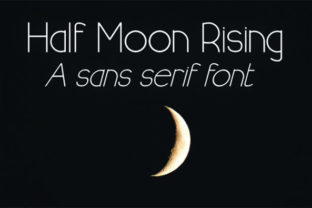
At first glance, Half Moon Rising presents itself as a clean, minimalist sans serif with a notably thin stroke weight. This is not a font designed for heavy headlines or bold statements. Instead, it excels in contexts where subtlety and elegance are paramount. The thin lines create a sense of openness and breathing room, making the text feel uncluttered and modern.
The Regular variation is straightforward and neutral, ideal for body text or interface elements where readability is key. The Regular Italic adds a gentle slant that can be used for emphasis, quotes, or secondary information without disrupting the overall harmony. Both versions share a consistent x-height and well-proportioned letterforms, which helps maintain a cohesive look when they are used together.
One notable quality of Half Moon Rising is its economy of visual weight. Because the strokes are thin, the font works exceptionally well at medium to small sizes where thicker typefaces might appear heavy or crowded. This makes it a strong candidate for user interfaces, captions, annotations, and any scenario where you need text to be present without dominating the layout.
Where Half Moon Rising Shines in Practice
The real value of a typeface emerges when you consider its practical applications. Half Moon Rising is not a one-size-fits-all solution, but it has several natural strengths that make it a go-to choice for specific use cases.
Digital interfaces and web design
Thin sans serif fonts have become increasingly popular in digital design, particularly for modern, minimal interfaces. Half Moon Rising works well for navigation labels, button text, form fields, and other UI elements where clarity and space are important. The thin strokes reduce visual noise, which can help users focus on functionality rather than typographic flair. Because the font remains legible at small sizes, it is also suitable for footnotes, tooltips, and metadata in web applications or mobile interfaces.
Branding and identity materials
If you are developing a brand that values simplicity, refinement, or understated luxury, Half Moon Rising can be an effective choice. It pairs well with generous white space and simple geometric logos. For example, a lifestyle blog, a boutique consultancy, or a creative studio could use the Regular version for taglines, mission statements, or body copy in brand guidelines, while the Italic version adds a subtle human touch to pull quotes or testimonials.
Editorial and publishing layouts
In magazines, brochures, or annual reports, Half Moon Rising can serve as a secondary typeface for captions, bylines, or sidebar content. Its thin appearance contrasts nicely with bolder headline fonts, creating visual hierarchy without competition. The Italic variation is particularly useful for introducing a softer, more personal voice in editorial design—think author bios, introduction paragraphs, or highlighted excerpts.
Educational and instructional materials
Clear communication is critical in educational contexts. Half Moon Rising can be used in handouts, slide decks, or online course materials where clarity and readability are priorities. The thin strokes work well in combination with larger headings and clear infographics, ensuring that the content remains accessible without feeling overwhelming. The Italic variation can mark important terms or examples without resorting to bold or underlined text.
Personal projects and creative work
Freelancers, hobbyists, and content creators often need typefaces that are both professional and distinctive. Half Moon Rising offers that balance. Whether you are designing a personal portfolio website, creating social media graphics, or developing a small zine, this font adds a clean, contemporary feel. The thin weight can also be used effectively in digital invitations, event programs, or product packaging where a light, elegant impression is desired.
Practical Benefits of Using Half Moon Rising
Choosing a typeface is not just about aesthetics—it affects usability, efficiency, and the overall user experience. Half Moon Rising brings several practical benefits that go beyond appearance.
- Improved readability at small sizes: Because the strokes are thin, the font does not fill in or become muddy when scaled down. This is especially useful for mobile interfaces, captions, or dense data displays.
- Visual lightness reduces cognitive load: In layouts with lots of text, a thin sans serif can make the page feel less dense and more approachable. Readers may find it easier to scan and absorb information.
- Versatile pairing potential: Half Moon Rising pairs well with serif fonts, slab serifs, or even other sans serifs that have medium or bold weights. This flexibility makes it a practical addition to any designer’s type library.
- Consistent family: Having both Regular and Regular Italic ensures you can maintain a cohesive look while adding emphasis or variation where needed. You do not need to mix fonts from different families just to get an italic option.
Considerations When Working with Half Moon Rising
No typeface is perfect for every situation, and Half Moon Rising has a few characteristics worth keeping in mind.
Thin strokes may not suit large headlines. At very large sizes, the thin weight can appear fragile or lose presence, especially in contexts that demand authority or impact. For headlines, consider pairing Half Moon Rising with a bolder companion font. This approach leverages the font’s strengths while compensating for its limitations.
Contrast and background matter. Because the font is thin, it requires sufficient contrast against the background. On light backgrounds, the Regular weight should be fine at moderate sizes. On dark backgrounds, consider increasing the font size or weight slightly to maintain readability. The Italic version may also benefit from careful handling to ensure the slant does not compromise legibility at smaller scales.
Test across devices and media. If you are using Half Moon Rising in a digital product, test it on various screen sizes, resolutions, and browsers. Thin fonts can sometimes render inconsistently depending on the rendering engine. It is a good practice to verify that the font maintains its clarity across the platforms your audience uses.
Making the Most of Half Moon Rising in Your Projects
To get the best results with Half Moon Rising, start by defining the role you want the font to play. If it is the primary text font, set it at a readable size with ample line spacing. If it is used for accents, captions, or labels, ensure that it contrasts clearly with surrounding elements.
When combining it with other typefaces, look for fonts that share similar proportions but offer more weight. A solid serif or a medium-weight sans serif can provide the structure that Half Moon Rising’s thin strokes lack. This pairing creates a clear hierarchy that guides the reader naturally through the content.
Do not overlook the Italic variation. In many projects, a simple italic can replace the need for bold or underlined text, offering a more refined way to draw attention. Consider using it for quotes, author credits, or introductory paragraphs where you want a slightly different tone.
Finally, trust your eyes. Typography is as much about feel as it is about rules. If Half Moon Rising looks right for your project and reads well across your intended media, it is likely a solid choice. The font’s clean lines and elegant simplicity make it a reliable tool for designers, creators, and professionals who value clarity and subtle sophistication.