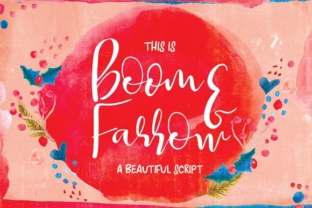
Boom Farrow
If you’ve ever found yourself scrolling through font libraries, hunting for something that feels less like a generic shape and more like a piece of art, you’ve probably bumped into Boom Farrow. This handcrafted font from Creativeqube sits at that sweet spot between expressive and usable. It’s not just another display typeface; it’s a tool that brings personality to projects that otherwise risk blending into the background.
But what does that actually mean for you? Let’s skip the feature list and talk about where this font really shines — because knowing when to use something matters way more than knowing its kerning table.
Branding That Feels Human
Think about the last time a logo made you pause. Chances are, it wasn’t because of the colors or the icon — it was probably the lettering. Boom Farrow carries that handmade quality that says someone cared about the details. For small businesses, freelancers, or local shops trying to stand out, using a font like this in your wordmark or primary logo instantly communicates craft. It’s perfect for bakeries, boutique clothing lines, coffee roasters, and artisan studios where the “handmade” story is central. The uneven strokes and organic curves remind people that there’s a person behind the brand, which is exactly the feeling you want when you sell something personal.
Packaging Design That Demands a Second Look
Ever notice how some products on a shelf just draw your eye? Often it’s the typography doing the heavy lifting. Boom Farrow works beautifully on packaging — especially for limited editions, seasonal releases, or products with a nostalgic or rustic angle. Imagine a jar of honey with a label set in this font, or a craft beer can where the name sits bold and irregular across the front. It gives off “small batch” energy without trying too hard. Designers working in food, beauty, or home goods industries often reach for typefaces like this when they want the packaging to feel collected, not corporate.
Graphic Designers Looking for a Signature Element
If you’re a designer, you know the struggle of finding a font that doesn’t look like every other sleek sans serif on the market. Boom Farrow becomes that reliable go-to for hero text, poster headlines, or social media graphics that need a human touch. It’s bold enough to carry a message alone but detailed enough to work alongside simpler typefaces for contrast. Pair it with a clean sans serif for body copy, and your layout instantly gains depth. Many designers use it for mood boards, pitch decks, or even wedding invitations because it adds warmth without feeling childish.
Small Business Owners Who DIY Their Branding
Not everyone has a design budget, but you still want your brand to look thoughtful. If you’re running an Etsy shop, a consultation service, or a local food truck, you can use Boom Farrow to create your own logo, banners, or menu boards. Because it’s handcrafted, even a simple layout looks intentional. You don’t need complex graphic skills — just place your business name in this font, add a clean background, and you’ve got something that feels custom. Just be careful with long phrases; this font thrives in short, punchy statements.
Marketers Running Campaigns with Personality
Email headers, landing page titles, and Instagram story covers all compete for attention. Boom Farrow works well as the visual anchor for campaigns that want to feel energetic or heartfelt. A holiday sale banner, a launch announcement for a new product, or a “thank you” poster for loyal customers — these are the moments when a distinctive typeface can turn a routine communication into something memorable. One tip: use it sparingly. Because it’s so expressive, letting it lead one big statement per piece keeps the design from getting chaotic.
Editorial and Magazine Layouts
Indie magazines, zines, and editorial projects love fonts that bring texture. Boom Farrow can work as a drop cap, a pull quote, or a section title. Its hand-drawn quality contrasts nicely with clean body text, giving readers a visual breather. If you’re publishing a food or travel magazine, the font can evoke a sense of place and process — like a hand-written note from a local guide.
Event Posters and Flyers
Music festivals, art openings, craft fairs — these events need posters that feel current but grounded. Boom Farrow fits right in when you want to announce a band name or a headline in a way that feels alive. The irregular shapes prevent it from looking too polished, which is a good thing for events that pride themselves on authenticity. Designers often combine it with distressed textures or muted color palettes to double down on that analog vibe.
Web and Digital Design
Using a handcrafted font on screen can be tricky, but Boom Farrow handles well for headlines and navigation elements when sized generously. It’s especially effective on landing pages for creative agencies, portfolios, or online stores selling handmade goods. Because it’s bold, it holds up on mobile screens too — but always test it. On smaller devices, the details might blur if the font size drops below 20px. Stick to using it for major headings rather than body text, and your site will keep its personality without sacrificing readability.
Readability at Small Sizes
Like many handcrafted display fonts, Boom Farrow is not designed for long paragraphs or tiny footnotes. The quirks that make it beautiful at large sizes can become confusing when scaled down. If you need body text, pair it with a neutral, highly legible font like a standard serif or a clean sans. This way you get the best of both worlds: personality where it counts, and clarity where it’s needed.
Licensing and Usage Rights
Always check what license you’re getting. Some handcrafted fonts limit commercial use or require an extended license for branding and merchandise. Creativeqube likely offers different tiers, so read the fine print before you use Boom Farrow in a logo you plan to trademark or on products you’ll sell. It’s a small step that saves headaches later.
Pairing with Other Fonts
Because Boom Farrow has a strong character, it can clash with fonts that also try too hard. Safe pairings include simple geometric sans serifs (like Montserrat or Poppins) or understated serifs (like Lora or Merriweather). Avoid pairing it with another display font that has similar energy — the result is usually visual noise. Think of Boom Farrow as the lead singer; everything else should be backup.
Cultural and Contextual Fit
This font carries a certain warmth and nostalgia. It works wonderfully for rustic, vintage, or artisanal themes, but might feel out of place in ultra-modern tech branding or formal legal documents. Consider where your audience will encounter the design. If you’re designing for a law firm or a fintech startup, Boom Farrow probably isn’t the right choice. If you’re designing for a ceramics studio or a children’s book cover, it’s almost a no-brainer.
Strengths Worth Celebrating
- Authenticity: In a world of perfect vectors, a handcrafted font communicates real human effort.
- Versatility: Works across print, digital, merchandise, and environmental design when applied thoughtfully.
- Memorability: People remember unique typography. Boom Farrow helps your project stick in someone’s mind.
- Easy to Scale: The bold weight and consistent stroke width mean it remains recognizable even when blown up on banners or billboards.
Limitations to Keep in Mind
- Not built for body text: Keep it for headlines, logos, and short phrases only.
- Can be polarizing: The handmade look isn’t for every audience. If your brand needs to feel cold or ultra-professional, this may not fit.
- Requires careful pairing: You can’t just drop it into a design without considering the supporting typeface and overall balance.
- May need extra spacing: Depending on the context, you might need to adjust letter spacing or leading to avoid a cramped look.
Real Example: A Small Bakery’s Rebrand
Let’s put it into context. A local bakery originally used a generic script font for everything — bags, signage, website. They wanted to shift toward a more artisanal feel. By switching to Boom Farrow for their logo and using a simple sans serif for ingredient lists and pricing, the brand instantly felt warmer. Customers started commenting on the “new look” before even reading the menu. The font’s irregular edges matched the homemade cookies and rustic breads. It wasn’t about the font alone — it was that the font supported the story they were already telling.
Final Thoughts on Boom Farrow
Boom Farrow by Creativeqube is more than a font file — it’s a design shortcut to authenticity. Whether you’re a seasoned designer experimenting with new voices or a small business owner shaping your identity, this typeface offers a way to communicate care and craft without saying a word. Just remember to respect its strengths: use it big, use it bold, and let it lead. Pair it with something quiet, and you’ll have a visual voice that feels both fresh and familiar.