Torquay Hotel: A Handcrafted Font Worth Examining
When evaluating typefaces for a project, the distinction between a generic digital font and one that carries a deliberate, handcrafted quality is often immediately visible in the final output. Torquay Hotel, a font created by the design studio Creativeqube, sits firmly in the latter category. It is not merely a set of characters; it is a carefully drawn typeface that brings a specific texture and personality to any layout. For designers, content creators, and business owners who rely on typography to communicate tone, understanding what Torquay Hotel offers — and where it fits best — is a practical decision that affects readability, brand perception, and overall project cohesion.
What Torquay Hotel Is and Why It Deserves Attention
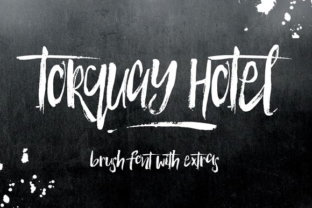
Torquay Hotel is a handcrafted display font developed by Creativeqube, a studio known for producing typefaces with distinctive character and attention to detail. Unlike many fonts that are optimized solely for digital legibility at small sizes, this typeface leans into its handmade origins. The letterforms carry subtle irregularities, varied stroke weights, and a warmth that is difficult to achieve with purely geometric or mechanical type design. It is not a neutral workhorse font; it is designed to be seen and recognized. This makes it a strong candidate for projects where the typography itself needs to contribute to the visual narrative, such as branding, packaging, editorial headlines, signage, and web headers. The font’s name itself evokes a sense of coastal charm and retro hospitality, which aligns well with its aesthetic — a blend of casual elegance and hand-lettered authenticity.
Key Characteristics and Design Strengths
The most immediately noticeable quality of Torquay Hotel is its handcrafted feel. Each character appears to have been drawn with care, avoiding the sterile perfection that often accompanies fully automated font generation. This results in a typeface that feels organic and approachable. The strokes are not uniformly weighted; instead, they taper and swell naturally, mimicking the pressure and rhythm of a writing instrument. This quality gives the font a sense of movement and life that can make a headline or logo feel more personal and less corporate.
Another notable strength is the font’s versatility within its own style. While it is clearly a display typeface — meaning it performs best at larger sizes — it includes enough variety in letterforms to support short passages of text without becoming tiresome. The uppercase characters are particularly distinctive, with elegant swashes and flourishes on certain letters that add a decorative touch without overwhelming the overall readability. The lowercase set maintains a more restrained profile, which allows designers to mix case combinations for different effects. The overall spacing is well-considered, with kerning pairs that prevent awkward gaps in common letter combinations, a detail that speaks to the font’s professional polish despite its handmade roots.
Quality of Construction and Consistency
One concern with handcrafted fonts is that they can sometimes sacrifice consistency for character. Torquay Hotel manages to strike a balanced approach. The glyph set is comprehensive enough for most practical applications, including standard punctuation, numerals, and accented characters for multilingual use. The x-height is moderately tall, which aids readability in shorter text blocks, and the ascenders and descenders are proportioned to give the typeface a comfortable rhythm on the page. The consistent baseline and cap height ensure that while individual letters have hand-drawn quirks, the overall texture remains even and professional. This is a font that can be used on a menu, a product label, or a website hero section without looking amateurish or uneven.
Practical Value and Real-World Performance
In real-world use, Torquay Hotel performs best in contexts where the typeface is given room to breathe. It thrives as a headline font, a logo mark, or a short-form display element. On a poster or a brochure cover, its handcrafted quality immediately signals a human touch, which can be valuable for brands that want to convey authenticity, craftsmanship, or a sense of tradition. For a boutique hotel, a café, a craft brewery, or a lifestyle publication, this font can become a core part of visual identity. It also works well for social media graphics, YouTube thumbnails, and other digital assets where stand-out typography is needed to capture scrolling attention.
However, it is important to recognize its limitations in extended body text. At smaller sizes, particularly below 16–18 points, the irregular stroke weights and decorative details can reduce legibility, especially on screens with lower resolution. This is not a flaw in the font’s design; it is simply a function of its intended use case. Designers who try to use Torquay Hotel for long paragraphs or dense information will likely find that reader fatigue sets in faster than with a more neutral serif or sans-serif. The smart approach is to pair it with a complementary, more straightforward typeface for body copy, reserving Torquay Hotel for the moments that need emphasis and personality.
Who Benefits Most from Torquay Hotel
The audience that stands to gain the most from Torquay Hotel is broad but specific in its needs. Small business owners, particularly those in hospitality, food and beverage, retail, and creative services, will find the font immediately useful for branding materials. A bed-and-breakfast, a seaside resort, a vintage-style diner, or a handmade goods shop can all use this typeface to reinforce a brand identity that values warmth, tradition, and a personal touch. For entrepreneurs launching a new brand, the font provides a ready-made visual cue that can differentiate them from competitors who rely on generic corporate typography.
Freelance designers and creative agencies will appreciate Torquay Hotel as a versatile tool in their type library. It is useful for client projects that require a custom feel without the time and cost of commissioning a bespoke typeface. Marketers and content creators working on campaigns with a nostalgic, coastal, or artisanal theme can use the font to strengthen visual storytelling. Bloggers and publishers who focus on lifestyle, travel, food, or design topics can apply it to headlines and pull quotes to add character to their layouts. Educators and serious hobbyists involved in print projects — such as event programs, zines, or portfolios — will also find its handmade aesthetic adds a layer of craft that elevates the final piece.
Evaluating Fit for Different Workflows
Torquay Hotel integrates well into most standard design workflows. It is available in common font formats that work across both macOS and Windows, and it loads predictably in major design applications like Adobe Illustrator, Photoshop, InDesign, Figma, and Canva. For web use, the font can be implemented via standard @font-face CSS rules, though designers should test rendering on various browsers and devices to ensure the handcrafted details display as intended. The font’s file size is reasonable, and it does not introduce significant performance concerns for web projects. Licensing terms from Creativeqube are straightforward, with options that typically cover desktop, web, and app use, so checking the specific license for commercial projects is always recommended.
Possible Limitations and Practical Considerations
No font is perfect for every situation, and Torquay Hotel is no exception. Its handcrafted nature means that it will not suit projects requiring a clean, minimalist, or highly formal appearance. A law firm, a financial institution, or a tech startup aiming for a sleek, modern interface would likely find this typeface out of place. Additionally, while the font includes a range of decorative characters, the absence of multiple weights (such as light, bold, or black) can limit design flexibility in more complex projects. Designers accustomed to large type families with extensive weights and widths may need to supplement Torquay Hotel with additional fonts to achieve sufficient hierarchy.
Another consideration is legibility at small sizes in digital contexts. While the font performs well in print at larger scales, screen rendering at 14 points or below can cause the finer details to blur or become difficult to read. For responsive web design, it is wise to reserve this font for larger headings and use a simpler fallback for navigation, captions, and small body text. Testing on high-resolution displays helps, but planning for lower-resolution screens remains important for accessibility and user experience.
Long-Term Value and Versatility
From a long-term perspective, Torquay Hotel holds its value well as a design asset. Its distinctive style is not tied to a fleeting trend; the handcrafted lettering approach has enduring appeal, particularly in branding that emphasizes heritage, quality, and human craftsmanship. For businesses that plan to maintain a consistent visual identity over several years, this font can serve as a reliable cornerstone. Its uniqueness also reduces the risk of a brand looking like competitors who use more common typefaces. For designers, adding a font of this caliber to a personal library means having a go-to option for projects that call for a friendly, polished, and memorable typographic voice.
Final Observations on Effective Use
Torquay Hotel succeeds because it offers something that many digital-native fonts do not: a genuine sense of having been made by hand. That quality translates into a feeling of care and intention in the final design. For anyone evaluating whether this font fits their needs, the answer depends largely on the project’s goals and audience. If the objective is to communicate authenticity, warmth, and a touch of nostalgia, Torquay Hotel is a strong and practical choice. If the project demands neutrality, maximum legibility at small sizes, or a wide range of weights, other options may be more suitable. The best outcomes come from using the font deliberately — letting it lead where its strengths shine and pairing it thoughtfully with supporting typefaces elsewhere. By understanding both its capabilities and its boundaries, designers and business owners can make an informed decision that serves their content, their audience, and their overall vision effectively.