Loganberry: A Handcrafted Font Designed for Real-World Impact
Typography has a way of shaping how your message is received—sometimes before a single word is read. Whether you’re building a brand, designing a presentation, or laying out a newsletter, the font you choose carries tone, personality, and authority. That’s where Loganberry comes in. Created by Creativeqube, this handcrafted font isn’t just another typeface; it’s a deliberate tool for anyone who wants their content to feel both professional and approachable.
In this article, we’ll look at what makes Loganberry different, where it shines, and how you can put it to work in your own projects—whether you’re a solo freelancer, a marketing team leader, or an educator preparing course materials.
What Is Loganberry? More Than a Pretty Typeface
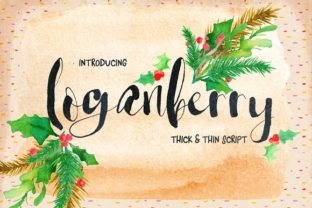
Loganberry is a handcrafted font developed by Creativeqube, a studio known for combining traditional lettering techniques with modern usability. Unlike many fonts that feel rigid or overly uniform, Loganberry carries the subtle imperfections and character that come from being drawn by hand. Each letter has its own nuance—slight variations in stroke weight, organic curves, and a rhythm that feels more like handwriting than mechanical type.
But don’t mistake that artistry for impracticality. Loganberry is built with real-world use in mind. It includes a full set of uppercase and lowercase characters, numerals, punctuation, and a selection of ligatures that help maintain a natural flow. Whether you’re using it for headings or body text, the readability stays strong without sacrificing the warmth that handcrafted design brings.
Key Characteristics That Set Loganberry Apart
- Handcrafted authenticity – Every glyph is shaped with intention, giving your text a human touch that standard sans-serifs often lack.
- Versatile weight and spacing – The letterforms are balanced for both display and paragraph use, so you’re not limited to one-size-fits-all situations.
- Natural ligatures and alternates – These features reduce awkward letter combinations and make your headlines or quotes feel fluid.
- Clear legibility at multiple sizes – Whether it’s a 12-point body or a 48-point title, Loganberry retains its character without becoming hard to read.
This combination makes it a strong candidate for anyone who needs their writing to feel intentional but not stiff—a common challenge when working with more formal corporate fonts.
Practical Applications Across Professional and Creative Fields
Loganberry’s design lends itself to a surprisingly broad range of uses. Here are some of the most effective ways to integrate it into your work.
Branding and Identity
If you’re building a brand from scratch or refreshing an existing one, the right font can anchor your visual identity. Loganberry works well for logos, taglines, and small business signage because it communicates craftsmanship without relying on overly decorative flourishes. A coffee shop, a boutique design studio, or an artisan bakery could all benefit from its warmth. Pair it with a clean sans-serif for body copy in your brand guidelines, and you’ll have a cohesive system that feels polished.
Marketing and Digital Content
Blog headers, email newsletters, landing page titles—anywhere you need to capture attention quickly—Loganberry can add personality. Because the letterforms are distinctive but still familiar, they stand out in crowded feeds without confusing readers. For example, use it sparingly as a pull quote accent in a long article, or as the main heading in an Instagram carousel. The organic curves draw the eye, encouraging readers to pause and engage.
Educational and Instructional Materials
Educators and trainers often struggle to make worksheets, slide decks, or handouts feel both authoritative and inviting. Loganberry bridges that gap. Use it for section headers in a study guide or for call-out boxes that highlight key concepts. The handcrafted look reduces the “corporate textbook” feel, making material more approachable for students and workshop attendees.
Personal Projects and Portfolios
Freelancers, hobbyists, and side-project creators can use Loganberry to give their portfolios a cohesive voice. A photographer’s website with Loganberry in the navigation and gallery titles feels more curated. A writer’s personal blog with handcrafted type gains a certain authenticity that purely geometric fonts can’t match. It’s a small change that signals you care about the details.
Usability and Efficiency: Why Loganberry Works in Practice
Beyond aesthetics, good typography should make your workflow easier, not harder. Here are a few considerations that make Loganberry a practical choice.
Readability Across Devices
One concern with handcrafted fonts is that they might degrade at small sizes or on lower-resolution screens. Loganberry avoids this pitfall through careful weight distribution. The counters (the enclosed spaces in letters like “o” or “e”) are open enough to remain clear on mobile devices, and the x-height is generous enough for comfortable reading in body text contexts.
File Format and Integration
Loganberry is typically available in standard web formats (WOFF, WOFF2) and desktop formats (OTF, TTF). This means you can use it across your design software, website, and print materials without conversion headaches. If you’re a marketer using a CMS like WordPress or Squarespace, you can upload the font and apply it via custom CSS or theme settings. For print projects, it works seamlessly in InDesign, Illustrator, or Canva.
Pairing Suggestions for Maximum Impact
To get the most out of Loganberry, pair it with a neutral sans-serif or a simple serif for body text. Good companions include:
- Montserrat – clean and modern, balances Loganberry’s warmth.
- Lora – a serif with its own character, suitable for long-form articles.
- Work Sans – minimal and functional for data-heavy layouts.
Observations and Recommendations
Having worked with a wide range of typefaces across commercial and personal projects, I’ve found that Loganberry sits in a sweet spot. It’s not trying to be a display font that only works in one context, nor is it a bland utilitarian typeface. It brings genuine character to the table while remaining reliable.
That said, here are a few practical tips:
- Use it consistently – Loganberry works best when applied consistently as a primary accent or heading font. Flicking between it and other hand-drawn styles can confuse the visual hierarchy.
- Watch your line spacing – Because the letters have organic ascenders and descenders, you may need slightly more leading than you’d use with a more uniform font. Test your layouts at different sizes.
- Consider licensing – Before using Loganberry in commercial products (like an app or a client’s logo), check the license terms from Creativeqube. Many handcrafted fonts come with standard desktop/web usage, but extended commercial use may require additional licensing.
Final Thoughts: A Font That Earns Its Place
Loganberry by Creativeqube isn’t just another pretty face in a crowded market. It’s a thoughtfully crafted tool that helps you communicate with personality, not in spite of it. Whether you’re designing a brand identity, writing educational content, or refining a personal portfolio, this typeface can elevate your work without needing to scream for attention.
Typography is often the quietest part of design, but it’s also the most consistent—every piece of content you create uses letters. Choosing a font like Loganberry that respects both art and function is a small decision with outsize impact. If you’re looking for something that feels human yet remains dependable, it’s well worth a trial run in your next project.