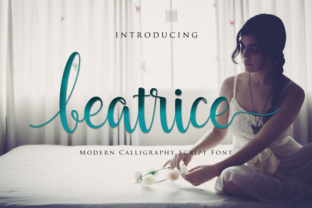
Beatrice: A Handwritten Font That Brings Warmth and Flow to Your Designs
Typography has a quiet power. It sets the mood before a single word is read, shapes first impressions, and often determines whether a message feels personal or impersonal, inviting or cold. In a digital landscape where clean, uniform typefaces dominate, there is growing appetite for fonts that reintroduce human touch, rhythm, and imperfection. Beatrice answers that call with a handwritten style built around a dancing baseline, giving every line of text a natural, unhurried movement that feels less like typesetting and more like a personal note.
Whether you are a designer looking for a distinctive display face, a small business owner wanting to give your brand a friendly voice, or a creator experimenting with visual storytelling, understanding what Beatrice offers and where it fits can help you make more intentional typographic choices. This article walks through the font's key characteristics, its practical applications, and the real-world considerations that matter when choosing a handwritten font for your projects.
What Makes Beatrice Different: The Dancing Baseline
Most fonts sit on a flat, invisible line. Every character aligns to that baseline, creating a perfectly even row of text. That consistency is valuable for long-form reading, but it can also feel mechanical. Beatrice takes a different approach. Its dancing baseline means letters rise and fall gently as they travel across the page, mimicking the natural variation you find in handwriting. No two lines sit exactly the same way, and that irregularity is precisely what gives Beatrice its warmth and personality.
This organic movement makes text feel alive. It suggests a human hand was behind the words, even when they appear on a screen or in a printed piece. For projects where approachability, authenticity, or emotional connection matters most, Beatrice's baseline becomes a subtle but powerful storytelling tool.
The Role of Contextual Alternates
Handwriting is rarely uniform. The same letter can look different depending on where it appears or which letters surround it. Beatrice mimics this natural variation through Contextual Alternates. The font automatically substitutes certain letterforms based on their position in a word or their neighboring characters, so repeated letters do not appear identical. This prevents the "stamp effect" common in many script fonts and keeps the text feeling spontaneous and handcrafted.
For example, in a word like "little," the two t's may take slightly different shapes, and the l's may vary as well. These subtle shifts add visual interest and reinforce the handwritten illusion. Readers may not consciously notice the alternates, but they will feel the difference in texture and authenticity.
Standard Ligatures for Smooth Connections
Ligatures are pairs or groups of letters that combine into a single glyph for better spacing and flow. Beatrice includes Standard Ligatures that smooth out transitions between specific character combinations. Instead of awkward gaps or clashing strokes, letters join naturally, preserving the rhythm of the dancing baseline. This is especially important for cursive-style handwritten fonts, where connectivity directly impacts readability and visual coherence.
Stylistic Alternates and Stylistic Sets for Customization
Not every project calls for the same level of flourish. Beatrice provides Stylistic Alternates and Stylistic Sets, giving you control over how expressive or restrained the type appears. You can choose alternate versions of individual characters or switch between entire sets to shift the font's personality. This flexibility means Beatrice can adapt to contexts ranging from playful and casual to elegant and refined, all without switching to a different typeface.
If you are designing a wedding invitation, for instance, you might select a more ornate set of alternates for the couple's names while keeping body text simpler. For a product label aimed at a younger audience, you might lean into the font's natural bounce and use alternates that emphasize its informal charm. The ability to fine-tune these details makes Beatrice more versatile than many handwritten fonts, which often offer only one fixed style.
Who Benefits Most from Using Beatrice
Beatrice is not a one-size-fits-all font, and knowing its ideal use cases helps you decide whether it fits your project. Below are several audiences and scenarios where Beatrice's characteristics add clear value.
Graphic Designers and Brand Identity Creators
Designers working on brand identities often need typefaces that convey specific emotions. Beatrice's dancing baseline and handwritten quality make it well-suited for brands that want to appear approachable, artisanal, or community-focused. It works especially well in logos, taglines, and hero text where personality matters more than strict uniformity. Pairing Beatrice with a clean sans-serif for body copy can create a balanced contrast that is both readable and distinctive.
Small Business Owners and Entrepreneurs
For small businesses, every communication is an opportunity to build trust. Beatrice can help product packaging, website headers, and social media graphics feel less corporate and more personal. A coffee roaster, a handcrafted soap company, or a local bakery could use Beatrice to echo the handmade quality of their products. Because the font includes multiple stylistic options, business owners can tailor the look to match their brand's voice without hiring a designer for custom lettering.
Event Planners and Invitation Designers
Weddings, parties, and special events thrive on atmosphere, and typography is a major part of that. Beatrice's flowing baseline and ligatures create a romantic, intimate feel on invitations, place cards, and signage. The stylistic sets allow for customization that matches different themes, from rustic outdoor ceremonies to modern urban gatherings. Event professionals can use Beatrice to produce cohesive printed materials that feel handcrafted at scale.
Content Creators and Social Media Managers
In a crowded digital feed, unique typography can stop a scroll. Beatrice gives content creators a way to add visual variety to quote cards, title slides, and promotional graphics. Its dancing baseline adds movement to static images, making text feel dynamic. Because it is a digital font, it integrates smoothly with design tools like Canva, Adobe Creative Suite, and Affinity, so creators can apply it directly without manual lettering.
Writers and Bloggers Looking for Unique Headings
Even if you do not consider yourself a designer, the fonts you choose for your blog or website affect how readers perceive your content. Using Beatrice for headings and pull quotes can give a personal blog or lifestyle site a warm, distinctive identity. Pair it with a clean, readable body font to maintain accessibility while adding character to headlines.
Practical Strengths of Beatrice
- Authenticity at scale. Handwritten fonts often struggle to maintain a natural look across long passages, but Beatrice's contextual alternates and dancing baseline help it retain spontaneity even in longer text blocks.
- Versatility through stylistic sets. Rather than buying multiple fonts, you get a range of expressions within one typeface, saving time and cost while expanding creative options.
- Emotional resonance. The organic baseline and varied letterforms create a sense of human presence that clean sans-serif and serif fonts rarely achieve.
- Ease of use in standard design software. Beatrice works with OpenType features supported by most modern applications, so accessing alternates and ligatures does not require advanced technical skills.
- Compatibility with both print and digital. The font renders well on screens and in print, provided appropriate sizing and spacing are applied.
Considerations and Limitations to Keep in Mind
No font is perfect for every situation, and Beatrice is no exception. Being aware of its limitations helps you use it where it shines and avoid it where it might fall short.
Readability at Small Sizes
Beatrice's dancing baseline and handwritten strokes can become harder to read at very small sizes, especially on screens. It is best suited for headings, short blocks of text, and display purposes. Using it for long body copy or small captions may strain the reader's eyes. If your project requires extended reading, reserve Beatrice for accent text and pair it with a more legible companion font.
Not Ideal for Formal or Highly Corporate Contexts
The warmth and informality that make Beatrice charming in personal branding or event materials work against it in formal corporate communications. Annual reports, legal documents, or institutional websites typically call for neutral, highly legible typefaces. Beatrice can feel out of place in those settings unless used sparingly as a decorative element.
Requires Thoughtful Pairing
Like most display fonts, Beatrice benefits from careful pairing with a contrasting typeface. Without a complementary font for body text, the overall design can feel unbalanced or overly busy. A simple sans-serif like Open Sans, Lato, or Montserrat often works well alongside Beatrice. Test pairings before committing to ensure they support each other rather than compete.
OpenType Feature Support
To access Beatrice's contextual alternates, ligatures, and stylistic sets, your design software must support OpenType features. Most professional tools do, but some simpler online editors or free platforms may not give you full control. If you rely on a specific tool, check its OpenType capabilities before purchasing or licensing the font.
Real-World Scenarios for Beatrice
To help you picture how Beatrice might fit into actual projects, here are three common scenarios where the font delivers noticeable impact.
Scenario One: A Small Batch Product Launch
Imagine a small-batch hot sauce brand launching its first line of products. The labels need to communicate craftsmanship, flavor, and personality. Using Beatrice for the product name and key flavor descriptors gives the label a handcrafted feel that aligns with the brand's artisanal identity. The dancing baseline adds energy, and stylistic alternates let each variety maintain a unique look while staying clearly part of the same family. Paired with a clean sans-serif for ingredients and nutritional information, the label balances character with clarity.
Scenario Two: A Wedding Invitation Suite
A wedding planner is designing an invitation suite for an outdoor garden wedding. Beatrice's flowing ligatures and romantic feel match the natural, intimate setting. The couple's names appear in a more ornate stylistic set, while details like date and venue use a simplified version for legibility. The dancing baseline echoes the organic shapes of flowers and greenery in the accompanying illustrations, creating a cohesive visual story across the save-the-date, invitation, and thank-you cards.
Scenario Three: A Personal Blog Redesign
A lifestyle blogger is refreshing their website to feel more personal and welcoming. They choose Beatrice for post titles and pull quotes, while keeping the main content in a clean serif font for comfortable reading. The contrast between the warm, bouncy headings and the stable body text gives the blog a distinct voice without sacrificing readability. Readers respond positively, noting that the site feels more like a conversation than a publication.
How to Evaluate Whether Beatrice Is Right for Your Project
Before committing to Beatrice, consider the following questions to determine alignment with your goals:
- What tone do I want to communicate? If warmth, approachability, or creativity are priorities, Beatrice is a strong candidate. If formality or neutrality is required, explore other options.
- Where will this font appear? For large headings, logos, or short blocks of text, Beatrice excels. For long articles, fine print, or small UI elements, consider a more legible alternative.
- Do my tools support OpenType features? Verify that your design software can access contextual alternates and stylistic sets. Without them, you lose much of what makes Beatrice distinctive.
- Can I pair it with a complementary font? Plan for a secondary typeface that balances Beatrice's personality. Test combinations early in your design process.
- Does it fit my brand or project identity? Beatrice works best when the brand values align with handmade, personal, or artisanal qualities. For corporate or industrial identities, it may feel mismatched.
Final Thoughts on Choosing Beatrice
Typography decisions are rarely just about aesthetics. Every font carries associations, affects readability, and shapes how your audience feels about your content. Beatrice stands out because it prioritizes humanity over perfection. Its dancing baseline, contextual alternates, ligatures, and stylistic sets work together to create text that breathes, moves, and feels like it was written by hand rather than generated by code.
That quality makes it valuable for anyone who wants their words to feel personal, approachable, and memorable. Whether you are branding a small business, designing an invitation, or refreshing your creative toolkit, Beatrice offers a distinctive voice that connects with people on a more emotional level than conventional typefaces often can. By understanding its strengths, limitations, and ideal contexts, you can use it with intention and get the most out of what it brings to your work.