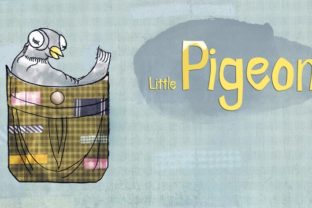
Little Pigeon
Typography is rarely neutral. Every font carries a voice, a posture, and an implicit promise to the reader. Some typefaces announce authority; others whisper intimacy. A handful manage something rarer still: they evoke the imperfect, human gesture behind the letterforms. Little Pigeon belongs to that handful. It takes its name seriously, stepping into the world with the tentative, curious quality of a fledgling learning its way. This is not a font designed for corporate annual reports or high-traffic dashboards. It was born from a deliberate attempt to capture handmade, spontaneous lettering, and its value emerges most clearly when you understand what that spontaneity can do for your communication, your brand, and your audience's trust.
For creators, marketers, educators, and small business owners who have grown tired of the polished uniformity that dominates much of modern design, Little Pigeon offers a strategic alternative. It is a tool for differentiation, but only when used with intention. The question is not whether you like the way it looks. The question is whether it aligns with the outcome you are trying to achieve.
Why a Handmade Typeface Deserves Strategic Attention
Most professionals treat typography as a cosmetic afterthought. They select a font because it feels nice or because someone else used it successfully. That approach overlooks a fundamental truth: typeface choice shapes how people process your message. Cognitive research consistently shows that font style influences perceived credibility, emotional tone, and even how well readers retain information. A font that looks too polished can signal corporate detachment. A font that looks too chaotic can signal carelessness. Little Pigeon sits in a productive middle ground where imperfection reads as authenticity.
Its handmade quality suggests that a human being was involved in the creation process. In an era where AI-generated content and templated design are everywhere, that human signal is becoming increasingly valuable. When you place Little Pigeon on a book cover, a greeting card, or a children's product, you are telling your audience, even subconsciously, that someone cared enough to make this by hand. That perception builds trust, and trust drives better outcomes across marketing, customer experience, and long-term brand equity.
Strategic Positioning Through Typography
Every brand occupies a position in the minds of its audience. That position is built from a combination of visuals, language, and behavior. Typography anchors all three. Little Pigeon positions you as approachable, sincere, and creatively engaged. It signals that you are not trying to hide behind corporate rigidity. This is especially useful for entrepreneurs, freelancers, and small business owners who compete against larger, more established players. You cannot outspend them, but you can out-connect them.
Consider a children's book publisher deciding between a dozen fonts for a new title. A standard sans-serif might feel safe but forgettable. A decorative script might feel ornate but illegible. Little Pigeon strikes a deliberate balance. Its irregular strokes and gentle weight suggest the hand of an illustrator, not the output of a machine. That choice communicates warmth and playfulness without sacrificing readability. For a brand whose entire value proposition rests on emotional connection, that is not a minor detail. It is a strategic asset.
Aligning Font Choice with Audience Expectations
Understanding your audience's expectations is critical before you commit to any typeface. Parents buying children's books are not looking for cutting-edge graphic design. They are looking for warmth, safety, and something that feels personal. Greeting card shoppers want to feel that the sentiment inside matches the visual tone on the outside. Little Pigeon meets those expectations because it mirrors the way people actually write when they are being sincere. Its irregular letterforms feel un rehearsed, and un rehearsed feels honest.
Marketers targeting millennial and Gen Z parents, in particular, should note that these demographics consistently respond to visual cues that feel handmade and small-batch. Mass production feels dated to them. Authenticity, even in its imperfect form, drives engagement. Using Little Pigeon in product packaging, social media graphics, or email headers can signal that your brand operates with a human-centered ethos. That perception directly supports positioning strategies built around care, quality, and community.
Practical Applications That Serve Real Goals
The most effective use of Little Pigeon comes when you pair it with clear objectives. It is not a font for body text in a dense white paper or a financial services website. Its strengths lie in headlines, short passages, and contexts where the visual personality of the typeface carries emotional weight. Below are several application areas where it can directly support your goals, along with strategic considerations for each.
- Children's book layouts and covers. The whimsical, hand-drawn quality of Little Pigeon mirrors the visual language of children's illustration. Use it for titles, chapter headings, or short poetic passages. Avoid using it for long paragraphs where sustained reading may cause fatigue. Pair it with a clean, neutral body font to maintain readability while preserving character.
- Greeting cards and personal correspondence. The greeting card market rewards emotional resonance. Little Pigeon works well for short messages, inside sentiments, and envelope addressing. Its irregularity feels personal, as though the sender took time to hand-letter each word. This can increase perceived value and justify premium pricing.
- Product packaging for handmade or artisanal goods. Small-batch producers, craft sellers, and specialty food brands benefit from typefaces that reinforce the handmade nature of their products. Little Pigeon on a label or tag communicates that the item inside was created with care, not manufactured at scale.
- Social media graphics and quote cards. Platforms like Instagram and Pinterest reward visually distinctive content. Using Little Pigeon for short quotes, announcements, or brand messages helps your content stand out in crowded feeds while reinforcing a personal, approachable brand voice.
- Classroom materials and educational resources. Educators, homeschool parents, and creators of learning tools can use Little Pigeon to make worksheets, posters, and activity sheets feel less institutional. The font's playful tone can reduce the intimidation factor for young learners.
- Blog headers and branding elements. Bloggers and content creators who write about parenting, creativity, lifestyle, or personal development can use Little Pigeon in site headers, post titles, and callout boxes. It signals that the content inside comes from a real person, not a content farm.
Planning Your Typography System with Little Pigeon
Using Little Pigeon effectively requires more than swapping it into your existing templates. Thoughtful planning prevents the font from feeling forced or out of place. Start by defining the emotional tone you want your audience to feel. Write down three or four adjectives that describe your brand voice. If those adjectives include words like playful, sincere, gentle, curious, or warm, then Little Pigeon likely fits. If they include words like authoritative, urgent, technical, or efficient, look elsewhere.
Next, map out where the font will appear. Reserve it for elements that benefit from personality: headlines, logos, pull quotes, decorative elements, and short calls to action. Use a simpler, more neutral companion font for body text, navigation, and any content where clarity and speed of reading are paramount. This pairing creates visual hierarchy. The audience reads the expressive headline first, feels the emotional cue, and then moves to the body copy where legibility takes over.
Testing Before Committing
Before you roll out Little Pigeon across your entire brand or project, test it with a small sample of your target audience. Show them a version of your material using the font and a version using a more conventional alternative. Ask them which feels more trustworthy, more personal, or more appropriate for the context. Their answers will tell you whether the font is supporting your goals or working against them. This step is especially important for entrepreneurs and small business owners who cannot afford to rebrand frequently. A short testing phase now prevents costly misalignment later.
Risks of Using Little Pigeon Without Clear Intent
No typeface is universally beneficial, and Little Pigeon carries specific risks when used without strategic consideration. The most common mistake is applying it to contexts where authority or precision is expected. A legal disclaimer, a medical instruction, or a financial summary set in Little Pigeon would undermine credibility almost immediately. Readers would question the seriousness of the content, and that doubt could extend to your entire organization.
Another risk is overuse. When every element on a page uses a highly expressive font, the design becomes noisy and exhausting. The eye has no resting place. The handmade quality that made the font charming in small doses becomes chaotic in large volumes. Reserve Little Pigeon for the moments that matter most. Let the rest of your design breathe with simpler typefaces.
Finally, consider cultural and audience context. What feels whimsical to one group may feel unprofessional to another. If your audience skews toward conservative industries or older demographics, test carefully. The same font that charms a parent buying a birthday card may confuse a corporate procurement officer reviewing a vendor proposal. Know your reader before you commit.
Long-Term Value and Brand Consistency
Typography is not a one-time decision. It compounds over time. Every time your audience sees Little Pigeon in your materials, they build a deeper association between the font's personality and your brand. If that association is positive and consistent, it becomes a shortcut to trust. They do not need to read your entire message to feel that you are approachable, creative, and human. They see the font and feel it immediately.
That long-term value depends on disciplined use. Create a simple style guide that specifies exactly where Little Pigeon appears, what sizes it works at, what colors it pairs with, and what fonts accompany it. Share that guide with anyone who produces materials for your brand. Consistency across touchpoints, from your website to your product packaging to your social media, reinforces the emotional position you have chosen.
Entrepreneurs and small business owners should also consider how Little Pigeon scales. A font that works beautifully on a greeting card may behave differently on a website header, a mobile screen, or a large printed banner. Request samples from your font provider at different sizes and in different formats before finalizing your choice. Verify that it renders cleanly across browsers and devices if you plan to use it digitally. These practical checks prevent surprises that could undermine the professional quality of your work.
Decision-Making Guidance for Creators and Professionals
If you are evaluating Little Pigeon for a current or upcoming project, step back and ask yourself a few strategic questions before you download or license the font. What specific outcome are you trying to produce? Is it higher engagement on social media? Stronger emotional resonance in a product launch? Greater differentiation in a crowded market? Write the outcome down. Then ask whether Little Pigeon moves you toward that outcome or away from it.
Next, consider the medium. Little Pigeon performs best in print and static digital contexts where its hand-drawn quality can be appreciated. Animated environments, small mobile screens, or low-resolution displays may diminish its impact. If your primary distribution channel is mobile-first, test readability at small sizes before committing.
Finally, trust your own judgment as a professional. You know your audience better than any font foundry or design blog. If Little Pigeon feels right for your project, and you can articulate why it serves your goals, then it is likely a sound choice. The risk is not in choosing an unusual font. The risk is in choosing one without understanding what it says about you. Use Little Pigeon deliberately, and it will help your work stand out for the right reasons.
Building a Workflow Around Your Font Choice
Once you decide to use Little Pigeon, integrate it into your workflow with clear guidelines. Include it in your design system or brand kit. Specify its use in headlines and decorative elements only. Set minimum and maximum size rules. Define color pairings that preserve its readability. Share justification for the choice with your team or collaborators so that everyone understands why this font matters. When people know the strategic rationale, they are far less likely to misuse it or abandon it for a safer alternative.
For freelancers and independent creators working alone, the discipline is just as important. Store your font files in an organized asset library. Keep notes on which projects it works for and which it does not. Over time, you will develop an instinct for when Little Pigeon fits and when it does not, and that instinct will save you time and improve your output.
The Role of Little Pigeon in Creative Differentiation
In a marketplace saturated with generic visuals, differentiation is not optional. It is a survival mechanism. Little Pigeon offers a form of differentiation that is accessible to anyone willing to be intentional about their typography. It does not require a massive marketing budget or a full design team. It requires a clear understanding of your audience, your message, and the emotional register you want to occupy.
The font's whimsical nature is not a limitation. It is a filter. It naturally attracts audiences who value creativity, warmth, and authenticity, and it repels audiences who demand cold efficiency. That filtering effect is valuable. It means that every person who responds positively to your use of Little Pigeon is already aligned with the emotional core of your brand. You are not trying to appeal to everyone. You are trying to appeal to the right people.
Used strategically, with clear goals and consistent application, Little Pigeon becomes more than a font. It becomes a signature. It tells your audience that you care enough to choose something handmade, something imperfect, and something human. In a world that increasingly values those qualities, that choice is both practical and wise.